Trump Orders Crypto Into the Financial Mainstream
President Trump just signed an executive order demanding crypto get a seat at the table in traditional finance. Here's what it means — and why Ripple may be positioned better than anyone to benefit.

President Trump signs an executive order directing regulators to tear down the walls between digital assets and traditional finance — and Ripple may be one of its biggest beneficiaries.
On May 19, 2026, President Donald Trump signed an executive order titled "Integrating Financial Technology Innovation into Regulatory Frameworks," directing the federal government and the Federal Reserve to update the rules governing how crypto and fintech firms access the U.S. financial system. The order's language was unambiguous: "To foster this financial innovation, the Federal Government must update regulations to allow integration of digital assets and innovative technology into traditional financial services and payment systems." This is not a pledge or a proposal — it is a presidential directive, and its implications for the crypto industry are significant.
What the Order Actually Says
The order gives financial regulators three months to identify barriers and six months to propose innovation-friendly measures, specifically asking the Fed to reconsider how non-bank firms can obtain master accounts.
At the center of this directive is a single, powerful concept: the Federal Reserve master account. Fed master accounts are often likened to bank accounts for banks, allowing holders to move funds directly through the Fed's payment system. Until recently, these accounts were exclusively the domain of traditional banks — giving them privileged, low-cost access to the arteries of U.S. finance. Crypto and fintech firms had to rely on intermediaries, adding cost, friction, and counterparty risk to every transaction.
The order directs the Federal Reserve Board to evaluate the legal, regulatory, and policy framework governing fintech and crypto firms' access to Federal Reserve payment systems and submit a report to Trump within 120 days. The governors have also been asked to assess the Federal Reserve's legal authority to grant direct access to fintech and crypto firms and to explore "options for expanding such access to the extent permitted by law, subject to appropriate risk management requirements."
The order also addresses the broader regulatory environment. Financial regulators are asked to review regulations that could be amended to streamline applications for eligible fintech firms seeking bank and credit union charters.
Why This Matters Now
This executive order doesn't come out of nowhere. It is the latest chapter in a rapidly evolving story of crypto legitimization. In March 2025, President Trump signed an Executive Order to establish a Strategic Bitcoin Reserve and a U.S. Digital Asset Stockpile, positioning the U.S. as a world leader in government digital asset strategy.
The momentum accelerated from there. Earlier this March, Kraken became the first cryptocurrency firm in U.S. history to obtain a Fed master account, granting it direct connectivity to Fedwire — the central payment system used by thousands of American banks and credit unions.
Kraken Co-CEO Arjun Sethi hailed the move as the "convergence of crypto infrastructure and sovereign financial rails."
That breakthrough was both a milestone and a preview. With Kraken now inside the system, the question shifted from whether crypto firms could access Fed rails to how many would follow. Trump's executive order is designed to answer that question systematically, rather than on a case-by-case basis.
The administration's position is clear. A U.S. think tank, the Cato Institute, found in January that most debanking cases in the U.S. resulted from government pressure rather than individual banks' policies. The current administration has explicitly criticized this approach, saying existing rules have "favor[ed] incumbents at the expense of innovators."
The Regulatory Landscape
Senator Cynthia Lummis framed the directive as a correction to years of restricted access for financial technology companies. She said fintech firms had long been shut out while legacy institutions benefited from privileged access, adding that the administration's order was aimed at creating a more level playing field, stronger competition, and lower payment costs for consumers.
Coinbase Chief Legal Officer Paul Grewal also supported the move, saying the White House had acknowledged that outdated rules on payment access and third-party risk management favored incumbents over innovators. He described the existing framework as protectionist and said regulators should update it.
From the banking side, reaction has been mixed. Traditional banking groups previously pushed back when Kraken received its limited master account, raising concerns about systemic risk and regulatory arbitrage. Whether those objections slow or shape the Fed's review process over the next 120 days remains to be seen.
It is worth noting: the executive order requests a review and a report — it does not unilaterally open the Fed's payment rails. The Fed retains its own authority, and implementation remains subject to applicable law. Custodia Bank founder and CEO Caitlin Long emphasized on X: "Thank you, @POTUS, for recognizing that there is a continuing problem at the Federal Reserve with blocking legally-eligible institutions from access to the US payment system, which is a public good."
XRP & Ripple: A Convergence of Regulatory Wins
For Ripple and XRP holders, this executive order lands at an extraordinary moment — one where several major regulatory dominoes have already fallen in Ripple's favor.
The OCC Charter: The U.S. Office of the Comptroller of the Currency conditionally approved a national trust bank charter for Ripple National Trust Bank in December 2025. Ripple CEO Brad Garlinghouse called it "a massive step forward – setting the highest standard for stablecoin compliance with both federal and state oversight." Even if fully approved, Ripple would not operate like traditional banks such as Bank of America or JPMorgan Chase. Trust banks are legally restricted from accepting public deposits or offering conventional lending products. Instead, a Ripple National Trust Bank would focus primarily on custody, settlement, and digital asset management services.
The Fed Master Account Application: Ripple applied for a national trust bank charter and a Federal Reserve master account last year. That application has been pending, but Trump's executive order now instructs the Fed to complete reviews of pending applications that meet statutory requirements within 90 days — a timeline that could directly accelerate Ripple's path to the payment infrastructure it has long sought.
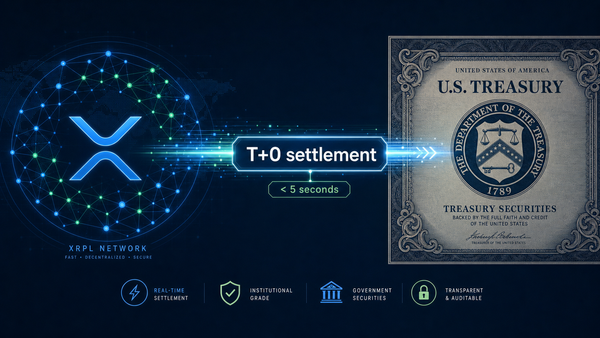
What It Would Mean: Such accounts would allow crypto firms to connect directly to payment systems like Fedwire without depending on intermediary banking partners for dollar settlement and transfers. For Ripple, which has built its entire business model around faster, cheaper cross-border payments, this would be a structural upgrade of enormous significance — giving its On-Demand Liquidity (ODL) product direct access to core U.S. payment rails rather than routing through correspondent banks.
The Broader Competitive Picture: Ripple is not alone. Crypto firms such as Kraken, Ripple, and Anchorage Digital are among companies seeking closer access to Fed payment rails. The outcome of the Fed's review will likely shape competitive dynamics across the industry for years to come.
A Note on Speculation: While this regulatory environment is clearly favorable to Ripple, important caveats apply. The Fed's review is not a guarantee of approval. Ripple's master account application remains pending and subject to the Fed's independent judgment. The impact on XRP's price, if any, will depend on market sentiment, broader macro conditions, and the actual pace of regulatory implementation. As analysts at CryptoRank note, positive regulatory news can influence market sentiment, but these developments are primarily about business infrastructure and long-term institutional adoption, not direct short-term price movement.
Market Implications
The broader market implications of this executive order extend well beyond Ripple. A regulatory framework that normalizes crypto firm access to Fed payment rails would fundamentally alter how stablecoin issuers, digital asset custodians, and blockchain-based payment networks operate inside the U.S. financial system.
Access to Fed payment rails can reduce reliance on intermediary banks and may allow faster movement of fiat currency tied to digital asset services.
The order also directs agencies to identify rules that may prevent banks and fintech firms from forming partnerships. That section may affect companies offering stablecoin payments, crypto custody, tokenized settlement, and other digital asset services through bank-linked platforms.
The long-term competitive pressure on traditional correspondent banking infrastructure could be substantial — though the scale and pace of that disruption will depend heavily on how regulators implement the order's directives over the coming months.
Key Takeaways
- President Trump signed an executive order on May 19, 2026 directing federal regulators and the Federal Reserve to update rules blocking crypto and fintech firms from traditional financial infrastructure.
- The Fed has 120 days to report on its legal authority and options for expanding payment rail access. Other regulators have 90 days to identify barriers to fintech-bank partnerships.
- Kraken already holds a limited Fed master account, setting a precedent the order is designed to expand upon.
- Ripple, with a conditional OCC charter and a pending Fed master account application, is among the companies most directly positioned to benefit — though approval is not guaranteed.
- The order is a policy directive, not a final rule. The pace of real-world implementation will determine whether this reshapes U.S. financial infrastructure or remains aspirational.
DISCLAIMER: This newsletter is for informational purposes only and does not constitute investment advice, advertising, or a recommendation to buy, sell, or hold any securities. This content is not sponsored by or affiliated with any of the mentioned entities. Investments in cryptocurrencies or other financial assets carry significant risks, including the potential for total loss, extreme volatility, and regulatory uncertainty. Past performance is not indicative of future results. Always consult a qualified financial professional and conduct thorough research before making any investment decisions.
Sources
- White House Fact Sheet: President Donald J. Trump Integrates Financial Technology Innovation into Regulatory Frameworks — WhiteHouse.gov, May 19, 2026
- Trump Orders Government, Fed to Review Crypto Firms' Access to Payment Rails — CoinDesk, May 19, 2026
- Trump Executive Order Pushes Digital Assets Toward Fed Payment Access — Bitcoin.com News, May 19, 2026
- Trump Orders a Review Into Banking Barriers for Fintech Firms — CoinTelegraph, May 19, 2026
- Trump Signs Executive Order Asking Fed to Evaluate Fintech's Access to Payment Accounts — Benzinga, May 19, 2026
- Ripple, Kraken Rejoice: Trump Signs Executive Order to Review Fintech Rules — Benzinga, May 20, 2026
- Trump Order Puts Kraken, Ripple, Coinbase and Circle in Line for Fed Payment Rails — CryptoSlate, May 20, 2026
- Trump Orders Fed to Open Payment Rails to Fintech and Crypto Firms — BigGo Finance, May 19, 2026
- Ripple, Circle, and BitGo Secure Conditional Approval for US Banking Charters — The Block, December 12, 2025
- OCC Green-Lights Circle, Ripple, Paxos for National Trust Bank Charters — Banking Dive, December 12, 2025
- Is Ripple Becoming a Bank? What OCC Approval Means for XRP — BeInCrypto, December 12, 2025
- Donald Trump Orders Review of Crypto Firms' Access to Fed Payment Rails — CoinCentral, May 19, 2026
- Trump Calls for Fed Review of Master Account Rules for Crypto Sector — Crypto.news, May 19, 2026
- Trust Bank Charters: The OCC's Pivotal Approval for Ripple and Crypto Giants — CryptoRank, December 2025