The CLARITY Act Clears the Senate Committee: What's Next, and Why XRP Stands to Gain the Most
The CLARITY Act just cleared the Senate Banking Committee 15-9 — with two Democrats breaking ranks. Here's what's in it, what comes next, and why XRP may be the biggest beneficiary if this becomes law.
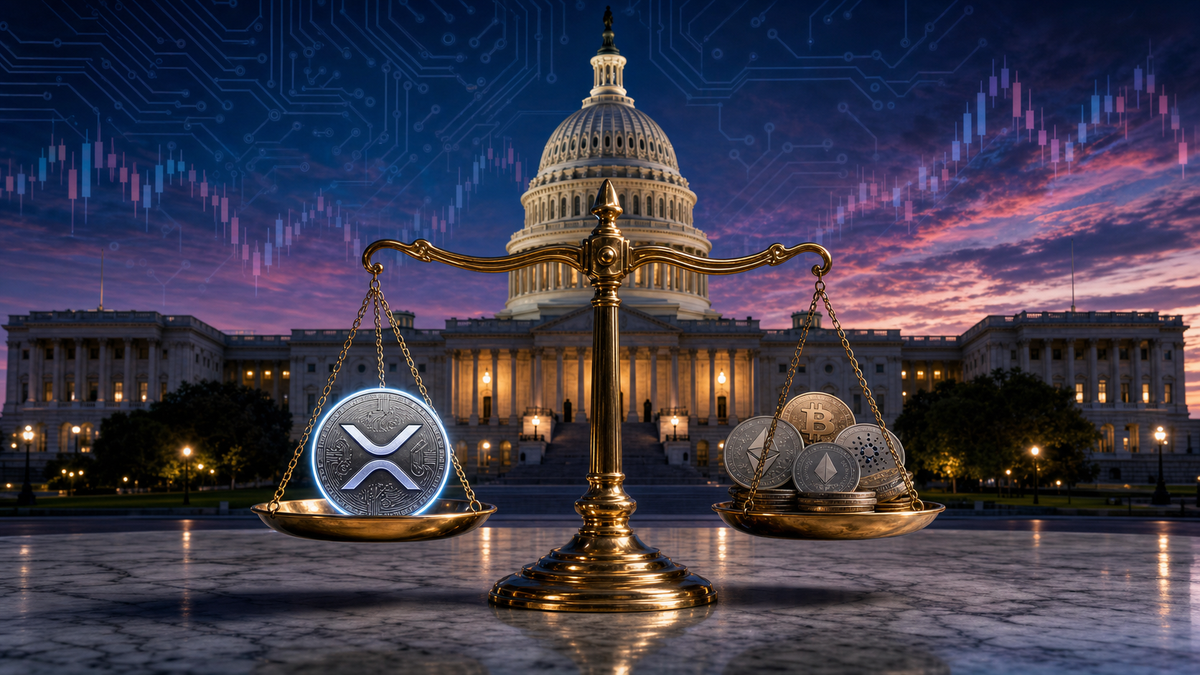
a The most consequential crypto legislation in U.S. history just cleared its biggest hurdle yet — but the real fight is just beginning.
On May 14, 2026, the Digital Asset Market Clarity Act of 2025 — known as the CLARITY Act — passed the Senate Banking Committee in a 15-9 bipartisan vote, with Democratic Senators Ruben Gallego (AZ) and Angela Alsobrooks (MD) joining all 13 Republicans on the panel. After months of canceled markups, fierce lobbying battles between the crypto industry and traditional banks, and sharp partisan friction, the bill has now crossed one of its most significant thresholds. It still has a long road ahead — but today's vote changes the conversation entirely.
What Just Happened and Why It Matters
The CLARITY Act had already passed the full House on July 17, 2025, in a 294–134 bipartisan vote, but it has been bottled up in the Senate ever since — stalled by disagreements over stablecoin yields, DeFi regulation, and ethics provisions targeting elected officials' crypto holdings. Today's Senate Banking Committee vote breaks that logjam and formally advances the bill to the next stage.
The legislation's stated goal is to end the regulatory no-man's land that has defined U.S. crypto policy for years. As Senate Banking Committee Chairman Tim Scott (R-SC) stated during the hearing: "For years, the digital frontier was trapped in a regulatory gray zone. Developers, entrepreneurs and investors were left with uncertainty. They faced confusion and enforcement actions, when instead, the government should have been crafting clear rules of the road."
The bill has heavyweight industry support from Coinbase, Circle, Ripple, and Andreessen Horowitz, and the White House has been actively pushing it forward. White House crypto director David Sacks called today's markup "a monumental step in making the U.S. the Crypto Capital of the World."
What's Actually in the Bill: The Provisions That Matter
Jurisdictional Clarity: The SEC vs. CFTC Question Answered
The CLARITY Act's core function is drawing a statutory line between securities and commodities in the digital asset space. For years, the SEC and CFTC have each claimed authority over different parts of the crypto market — creating a legal environment where companies were essentially guessing at the rules and waiting for lawsuits to define them. This bill draws that line in law, assigning regulatory jurisdiction clearly to each agency based on how a digital asset is classified.
Stablecoin Yield Compromise
One of the most fiercely contested issues was whether stablecoin issuers could offer yield to holders. The final language bans passive interest or yield on payment stablecoin balances held on exchanges — a concession to the banking lobby. However, rewards tied to actual activity — staking, governance participation, trading — remain permitted. This compromise was central to getting the bill out of committee.
Developer Protections (Section 604)
A significant and underreported provision is Section 604. As highlighted by X user @RiddleMeXRP, the bill explicitly protects open-source blockchain software developers who do not control customer funds. Under this provision: writing code is not money transmission, running nodes is not money transmission, and building self-custody infrastructure is not money transmission. This removes the threat of federal criminal liability and state-by-state registration requirements for developers — a provision that could meaningfully accelerate innovation on public blockchain networks.
AML and Sanctions Compliance
The bill requires digital asset exchanges, brokers, and dealers to comply with Bank Secrecy Act regulations, including anti-money laundering programs, suspicious activity reporting, and sanctions compliance. This was a key demand from Democratic members and addresses one of the industry's most persistent criticisms.
Banking Sector Access (Section 401)
The legislation explicitly authorizes U.S. banks and credit unions to use digital assets for payments, custody, clearing, and settlement. This is not a minor footnote — it's a statutory green light for the entire American banking sector to integrate digital asset rails.
What's Still Standing in the Way
Despite today's progress, the CLARITY Act is far from law. Here is exactly what must happen next:
Step 1 — Senate Agriculture Committee Merger: The bill must be merged with a separate but related version approved by the Senate Agriculture Committee, which has jurisdiction over commodities and the CFTC.
Step 2 — Senate Floor Vote: The merged bill must then clear the full Senate — and it needs 60 votes to pass, meaning at least seven Senate Democrats beyond today's two must come on board.
Step 3 — House Reconciliation: If the Senate version includes new components (ethics provisions, updated stablecoin language), the House must also approve those changes.
Step 4 — Presidential Signature: The White House has set July 4 as its target date for a signed bill.
The Critical Hurdle: The Ethics Provision
The single biggest wildcard is the ethics provision. Democratic Senator Kirsten Gillibrand has stated flatly that the CLARITY Act will not pass the full Senate without a conflict-of-interest provision targeting elected officials — an obvious reference to the Trump administration's extensive crypto holdings and business interests. Republican leadership has resisted this language. Cody Carbone of the Digital Chamber told reporters that resolving this deal before the Senate floor vote is likely necessary to reach 60 votes. Even Senator Alsobrooks, who voted yes today, said she would not support the bill on the full Senate floor until outstanding issues are addressed.
The August Clock
Time pressure is severe. Senators Cynthia Lummis and Bernie Moreno have both warned that if the bill cannot reach the Senate floor before the August recess, the next viable legislative window could be as far away as 2030, given midterm election dynamics.
XRP and Ripple: The Four Provisions That Directly Apply
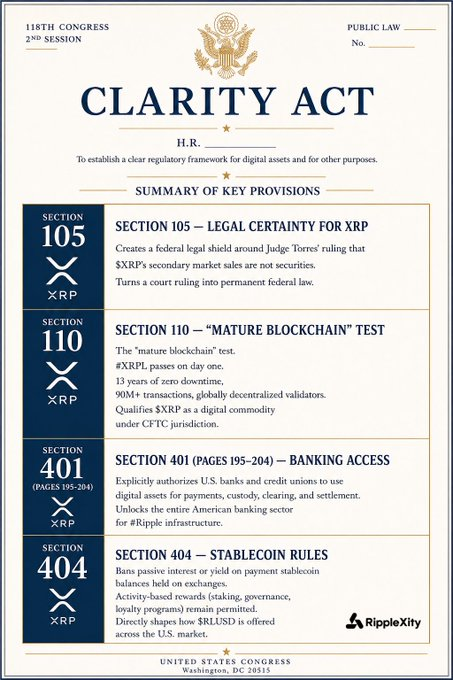
While the CLARITY Act is broad legislation, several specific provisions have direct and significant implications for XRP and Ripple. These are confirmed provisions in the bill's current text — not speculation about how the law might eventually be interpreted.
Section 105 — Federal Legal Shield for XRP
This is the provision the XRP community has watched most closely. Section 105 creates a federal legal shield codifying Judge Torres' 2023 ruling that XRP's secondary market sales are not securities transactions — turning a court ruling into a permanent federal statute.
The SEC v. Ripple case itself is already closed. Both parties jointly dismissed all appeals on August 7, 2025, with Ripple paying a $125 million civil penalty and a permanent injunction barring direct institutional XRP sales in the U.S. remaining in place. The core ruling — that XRP is not a security in secondary market transactions — stands as settled law.
What Section 105 adds is durability. A court precedent can be distinguished, limited, or challenged in future cases involving different fact patterns. Federal statute requires an act of Congress to undo. If enacted, Section 105 effectively makes the Torres ruling bulletproof from future SEC reinterpretation — which is why Ripple and the XRP community remain closely invested in the CLARITY Act even with the lawsuit firmly behind them.
Section 110 — The "Mature Blockchain" Test
Section 110 establishes a decentralization test for blockchains that determines whether a digital asset qualifies as a commodity under CFTC jurisdiction rather than a security under SEC jurisdiction. The XRP Ledger's record — 13 years of zero downtime and more than 90 million transactions processed through globally decentralized validators — would appear to position XRPL as a strong candidate to meet this standard. If XRP qualifies as a digital commodity under this test, it would fall under CFTC oversight, ending the SEC's jurisdictional claims over it.
It's worth noting that the specific technical criteria of this decentralization test have not yet been finalized in rulemaking — regulators will determine exact parameters after the bill becomes law, if it does.
Section 401 — Banking Access for Ripple Infrastructure
Section 401's authorization for U.S. banks and credit unions to use digital assets for payments, custody, clearing, and settlement carries specific implications for Ripple. Ripple's existing product suite — including RippleNet and its On-Demand Liquidity (ODL) service — is designed precisely for institutional cross-border settlement. A statutory authorization for banks to use digital asset rails removes the compliance barrier that has kept many U.S. financial institutions on the sidelines of Ripple partnerships. This could significantly expand the addressable market for Ripple's enterprise solutions domestically.
Section 404 — Stablecoin Rules and RLUSD
Section 404's stablecoin yield framework directly shapes how Ripple's RLUSD stablecoin can be offered across the U.S. market. Passive yield on stablecoin balances held on exchanges would be prohibited under the current bill text, but activity-based rewards — staking, governance, loyalty programs — remain permitted. Ripple will need to structure RLUSD's U.S. product offering around this framework if the bill becomes law.
Broader Market Implications
The CLARITY Act's advancement is widely seen as the most significant structural development for the U.S. crypto industry since the spot Bitcoin ETF approvals. Treasury Secretary Scott Bessent framed the bill in a Wall Street Journal op-ed as a national security matter, warning that without regulatory certainty, blockchain developers continue migrating to Singapore and Abu Dhabi.
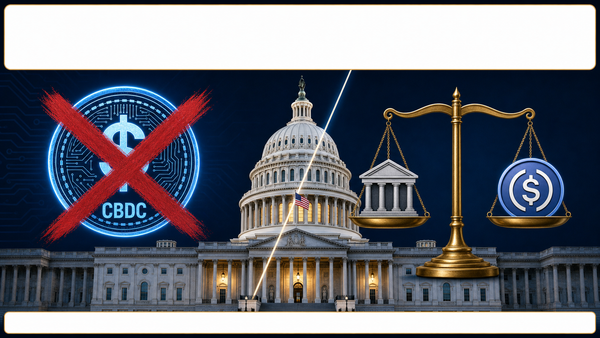
If enacted, Bitcoin would receive statutory commodity status. Ethereum and large-cap tokens would likely qualify as commodities depending on how they fare under the decentralization criteria. Many smaller altcoins may be classified as securities, facing stricter listing requirements. The bill also includes an amendment by Senator Bill Hagerty to ban Federal Reserve-issued CBDCs.
Key Takeaways
The CLARITY Act's committee passage today is the most concrete legislative progress U.S. crypto has achieved since the House vote last July. The bipartisan element — small as it is — matters because it signals that some Democrats see the political cost of being labeled "anti-crypto" ahead of midterm elections. The path to 60 Senate votes remains uncertain, but it is no longer implausible.
For XRP holders and Ripple watchers specifically, this bill contains more direct, named benefits than any piece of legislation in the asset's history — from codifying its non-security status to opening the entire U.S. banking sector as a potential customer base. Whether those benefits become law depends on whether senators can resolve the ethics provision standoff before the August recess clock runs out.
The next major milestones to watch: the Senate Agriculture Committee merger, any ethics compromise announcement, and the Senate floor scheduling decision — all of which are expected before Memorial Day.
DISCLAIMER: This newsletter is for informational purposes only and does not constitute investment advice, advertising, or a recommendation to buy, sell, or hold any securities. This content is not sponsored by or affiliated with any of the mentioned entities. Investments in cryptocurrencies or other financial assets carry significant risks, including the potential for total loss, extreme volatility, and regulatory uncertainty. Past performance is not indicative of future results. Always consult a qualified financial professional and conduct thorough research before making any investment decisions.