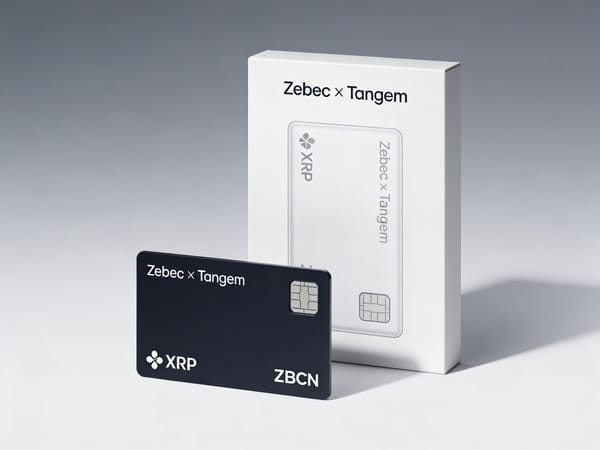
Zebec Protocol Expands Multi-Chain Strategy: Stellar Confirmed, XRPL Discussions Continue
Zebec Protocol officially expands to Stellar for real-time stablecoin payroll streaming. XRPL integration remains unconfirmed despite community speculation. Here's what's actually confirmed vs. what's still speculative—and why it matters for XRP holders.
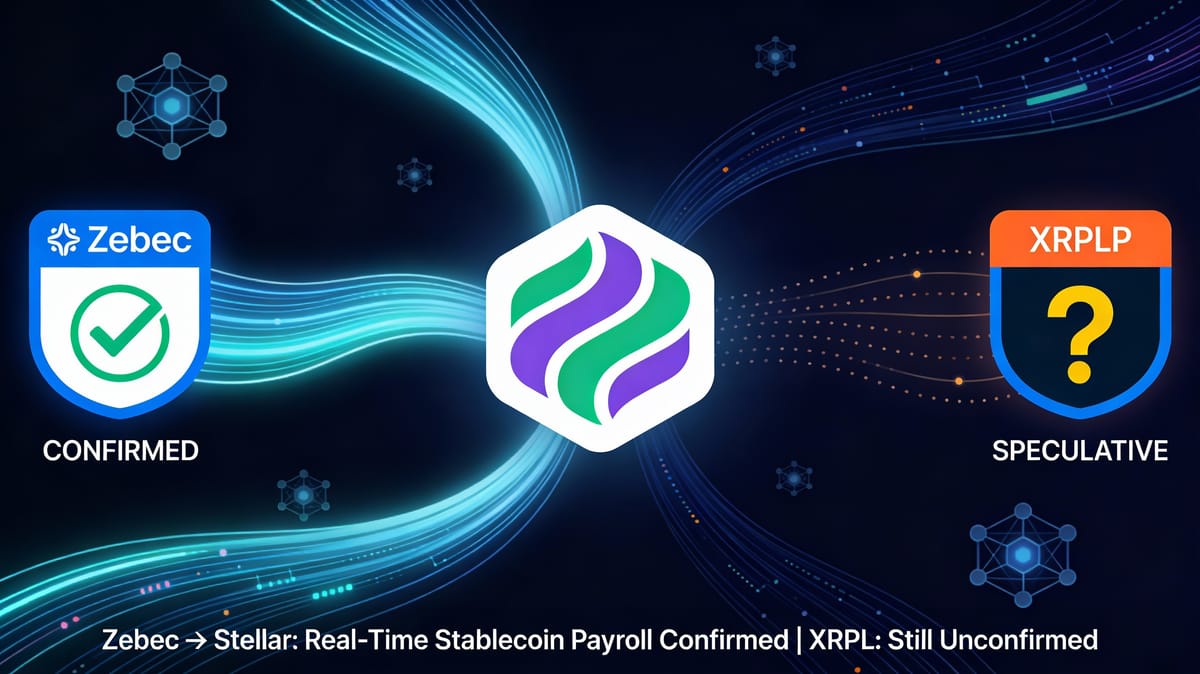
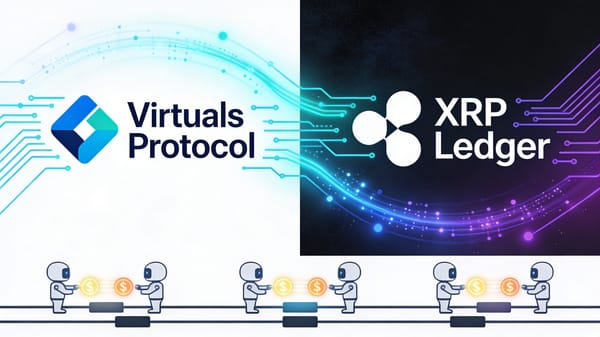
Zebec Network, the real-time crypto payroll protocol backed by Coinbase Ventures, Circle, and Lightspeed, has officially integrated with Stellar's blockchain infrastructure, marking a significant expansion of its multi-chain payment streaming capabilities. While this Stellar integration is confirmed and operational, community speculation continues regarding potential integration with the XRP Ledger (XRPL), based on past discussions between the companies but lacking official confirmation.
Confirmed - Zebec coming to stellar & the XRPL (Ripple) in 2026‼️With Xlm, XRP and RLusd playing their part 🚀
— @WelshieOutdoors🤑🏴☠️🚀☀️ (@WelshieOutdoors) January 9, 2026
Can you smell it 🤌 the year of adoption is here with big green candles loading and superapp defi heaven 🤑 endless money printing machine for our digital wallets 😏 pic.twitter.com/i5JYURUigb
What's Actually Confirmed: Zebec + Stellar Integration
In June 2025, Zebec Network officially announced its partnership with the Stellar Development Foundation during a live X Space, with Zebec COO Simon Babakhani explicitly stating the company was "working closely with @StellarOrg" on payment rails, reward infrastructure, and institutional custody design. This partnership is now visibly cemented on Zebec's official Partners page, where Stellar appears alongside Circle and Solana.
The Stellar integration enables Zebec's real-time payroll streaming engine to operate across Stellar's stablecoin-friendly ecosystem, where USDC, EURC, and PayPal's PYUSD launched in June 2025. This allows businesses to stream salaries in multiple fiat-anchored stablecoins with near-zero transaction fees using Stellar's ISO 20022-compliant messaging framework.
Why Stellar Makes Strategic Sense
Stellar has positioned itself as the global backend for fiat-on-chain movement, with traditional finance giants like Société Générale issuing EURC stablecoins on the network. For Zebec, this opens powerful use cases: a U.S. freelancer being paid in USDC, a Nigerian developer receiving PYUSD, and a Berlin-based educator being streamed EURC—all through the same Zebec interface, all settling on Stellar's rails.
With Stellar's Protocol 25 "X-Ray" upgrade launching January 22, 2026, which introduces zero-knowledge proofs for privacy-preserving transactions, Zebec's integration positions the protocol to offer compliance-forward confidential payroll streams—critical for enterprise adoption.
The XRPL Question: Discussions vs. Confirmation
IMPORTANT: While Zebec has confirmed its Stellar integration, the company has not made an official announcement regarding integration with the XRP Ledger, despite ongoing community speculation.
What We Know (Confirmed Timeline):
May 2025: During a live X Space co-hosted by Zebec Network and Uphold, community members reported that discussions between Ripple and Zebec were mentioned, with approximately 15,000 listeners present. However, this was not an official press release or formal partnership announcement.
June 2025: Zebec Network announced a reward program specifically for XRP holders on the Uphold exchange, requiring users to hold over $50,000 in XRP to qualify for ZBCN token rewards. This promotion suggested alignment between the ecosystems but did not constitute a technical integration announcement.
January 2026: Zebec's CEO hosted an X Spaces session on January 8, 2026, to discuss the company's 2026 product roadmap and updated tokenomics. While some community members interpreted comments during this session as confirmation of XRPL integration, no official transcript, press release, or technical documentation has been published by Zebec, Ripple, or the XRPL Foundation confirming this integration.
The Shared Infrastructure Connection
One concrete link between the ecosystems is Lightspeed Venture Partners, which holds strategic positions in both Ripple (invested in 2013 during OpenCoin's Series A) and Zebec Network (2022 investment supporting POS terminal rollout). Lightspeed manages over $28 billion in assets and helped fuel Zebec's deployment of over 100,000 point-of-sale terminals worldwide, processing more than $6.6 billion in payment volume.
This shared venture backing suggests strategic complementarity: Ripple provides cross-border settlement rails, while Zebec automates programmable logic for what happens to money the moment it lands. However, shared investors do not equal confirmed technical integration.
What XRPL Integration Could Theoretically Enable (If It Happens)
Speculation Disclaimer: The following section discusses theoretical applications of Zebec integration with XRPL. Zebec has not confirmed these plans, and the information below represents analysis of what could be technically possible, not what has been announced.
Theoretical Use Case: Real-Time RLUSD Payroll
If Zebec were to integrate with XRPL, the protocol could theoretically enable real-time payroll streams denominated in RLUSD (Ripple's enterprise-grade stablecoin). A developer in Kenya could receive streamed compensation in RLUSD on XRPL's ultra-fast settlement layer, with bonus payouts auto-triggering in USDC based on preset milestones coded into Zebec's smart contracts.
Why This Might Work:
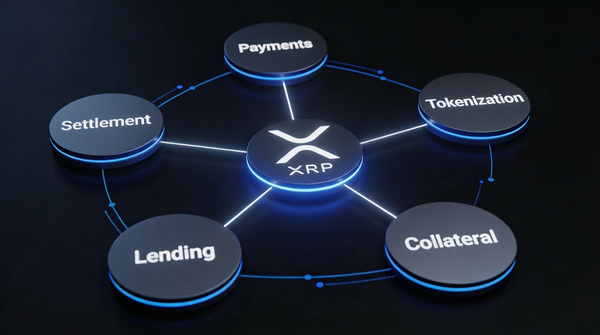
- XRPL settles transactions in 3-5 seconds with minimal fees
- Native DEX functionality for instant liquidity conversion
- Handles 1,500 transactions per second
- Built-in escrow and payment channel primitives
Why This Might Not Work:
- Technical Barriers: XRPL's architecture differs significantly from Solana and Stellar where Zebec currently operates. Integration would require substantial development work adapting Zebec's streaming protocol to XRPL's account model and transaction structure.
- Economic Barriers: XRPL integration would represent significant R&D investment for a protocol that already has working implementations on three chains (Solana, Algorand, Stellar).
- Existing Alternatives: XRPL's native payment channels already enable streaming payments without requiring external protocols like Zebec.
- No Official Timeline: Neither company has provided development milestones, technical specifications, or projected launch dates.
Reality Check: Why Integration Hasn't Been Announced
Despite months of speculation, several practical factors may explain the absence of official confirmation:
- Regulatory Complexity: Ripple faced years of SEC litigation that only recently concluded. Any new partnership announcements likely undergo extensive legal review.
- Technical Prioritization: XRPL's 2026 roadmap focuses on privacy (confidential Multi-Purpose Tokens via zero-knowledge proofs), native DeFi lending, and interoperability—not payment streaming protocols.
- Competitive Positioning: Ripple has invested heavily in Evernorth Holdings, a $1 billion digital asset treasury formed with SBI Holdings to build institutional-grade treasury and liquidity frameworks directly on XRPL. Evernorth's January 2026 collaboration with Doppler Finance suggests Ripple may be developing in-house treasury and payroll solutions rather than integrating external protocols.
- Market Dynamics: Zebec's integration strategy appears focused on stablecoin-centric chains (Stellar, Circle) where USDC and EURC dominate, while XRPL's ecosystem has historically centered on XRP as the native asset with limited stablecoin adoption until RLUSD's recent launch.
XRPL's 2026 Roadmap: What's Actually Coming
Independent of Zebec speculation, XRPL enters 2026 with confirmed protocol upgrades that could make the ledger more attractive to payroll and payment streaming applications:
Q1 2026: Launch of confidential Multi-Purpose Tokens (MPTs) using zero-knowledge proofs, enabling privacy-preserving collateral management and tokenized asset transfers while maintaining compliance transparency.
Q1 2026: Native lending protocol entering validator voting, offering fixed-rate loans isolated in Single Asset Vaults designed for market makers and fintechs.
Q1 2026: Axelar bridge integration connecting XRPL to Ethereum, Cosmos, and 55+ additional blockchain networks for cross-chain interoperability.
2026: Smart Escrows introducing programmability to existing Escrow primitives, allowing developers to add verifiable code to native features.
These upgrades position XRPL as enterprise-grade infrastructure for institutional DeFi, which could theoretically attract protocols like Zebec—but again, no announcements have been made regarding such partnerships.
XRP Impact Analysis: What Integration Could Mean (Speculative)
Important: This section analyzes theoretical market implications. No integration has been confirmed, and price predictions are inherently speculative.
Potential Bullish Factors (If Integration Occurs):
Increased Utility Demand: Real-time payroll streaming would create consistent XRP transaction demand for network fees and potential liquidity provisioning. Zebec currently processes $500 million in annual payroll volume across 250+ enterprise clients—if even a fraction migrated to XRPL, it would represent meaningful on-chain activity.
Enterprise Adoption Signal: Zebec's client roster includes partnerships with major financial institutions. Integration with XRPL would validate the ledger's enterprise-readiness beyond cross-border payments, potentially attracting additional B2B protocols.
Stablecoin Ecosystem Growth: RLUSD adoption could accelerate if Zebec enabled real-time wage streams, creating organic demand for Ripple's stablecoin and driving liquidity on XRPL's native DEX.
Reality Check: Why Price Impact May Be Limited
Priced-In Speculation: XRP community members have been discussing Zebec integration since May 2025. If the speculation is already reflected in XRP's price (currently ~$2.35 as of January 9, 2026), official confirmation might not trigger the rally some expect.
Usage vs. Token Value: Increased XRPL usage doesn't automatically translate to XRP price appreciation. Transaction fees on XRPL are measured in fractions of a cent, and even high transaction volumes may not materially impact XRP demand if institutional users hold fixed amounts for operational purposes.
Competitive Landscape: Zebec operates on multiple chains. XRPL would be one of several deployment options, not an exclusive partnership. Similar integrations on Stellar and Solana have not caused sustained price rallies for XLM or SOL based solely on Zebec's presence.
Market Structure: According to CoinMarketCap data, XRP's 60-day performance shows -8.9% despite network improvements, with thin trading turnover at 3.57% compared to Bitcoin's 8.9%. Technical indicators suggest XRP must reclaim $2.20–$2.30 resistance before bullish momentum confirms.
The Broader Multi-Chain Payroll Landscape
Zebec's strategy appears focused on becoming the universal payroll layer across multiple blockchain ecosystems rather than committing exclusively to any single chain. The protocol currently operates on:
Solana: Original deployment, leveraging high throughput for micro-transaction streaming Algorand: Integration for enterprise clients requiring regulatory clarity Stellar: Confirmed 2025 partnership focusing on stablecoin payroll and ISO 20022 compliance Ethereum: Infrastructure presence for DeFi integration
This multi-chain approach mirrors broader industry trends where protocols deploy across ecosystems to maximize addressable markets rather than betting on single-chain dominance. If XRPL integration eventually occurs, it would likely represent one piece of Zebec's omnichain strategy rather than a transformative exclusive partnership.
What to Watch For: Confirmation Signals
If Zebec and Ripple/XRPL are indeed planning integration, we would expect to see:
✅ Official Press Release: Joint announcement from Zebec and Ripple or XRPL Foundation with technical specifications
✅ Developer Documentation: Published API documentation, testnet deployment, or GitHub repositories showing XRPL integration work
✅ Testnet Launch: Public testing phase on XRPL Testnet or Devnet allowing developers to experiment with Zebec streaming on the ledger
✅ Timeline Disclosure: Specific milestones (Q1 2026, Q2 2026, etc.) with deliverables and launch dates
✅ Technical Specifications: Explanation of how Zebec's streaming architecture adapts to XRPL's account model and consensus mechanism
As of January 9, 2026, none of these confirmation signals exist in public documentation.
Bottom Line: Stellar Confirmed, XRPL Speculative
Zebec Network has made concrete progress with its Stellar integration, providing real-world utility for stablecoin-based payroll streaming with confirmed partnerships and operational infrastructure. This represents genuine expansion of blockchain-based payroll capabilities with immediate business applications.
The XRPL integration story remains unconfirmed speculation based on past discussions, strategic connections through shared investors, and community interpretation of comments during X Spaces events. While technical compatibility exists and strategic logic supports potential collaboration, the absence of official announcements, technical documentation, or development timelines means this remains in the "possible but unconfirmed" category.
For XRP holders and XRPL enthusiasts, the most prudent approach is to focus on what's actually confirmed: XRPL's 2026 protocol upgrades (privacy, DeFi lending, interoperability) and the growing ecosystem of official partnerships like Evernorth's institutional treasury framework. If Zebec integration materializes, it will be a welcome addition—but the ledger's growth doesn't depend on any single protocol partnership.
Sources
- Zebec Network Official X Account - Stellar Partnership Announcement
- Stellar Development Foundation - Protocol 25 X-Ray Announcement
- Stellar 2025 Year in Review - PayPal USD Launch
- BeInCrypto - Zebec Network XRP Holder Reward Program
- Medium - Ripple and Zebec Network Talks Analysis by Joseph Razo
- Medium - Lightspeed's Investments in Ripple and Zebec by Joseph Razo
- U.Today - Ripple Engineer Outlines XRPL 2026 Roadmap
- CaptainAltcoin - XRPL 2026 Roadmap Confirmation
- CoinMarketCap - Latest XRP Updates and Market Analysis
- U.Today - Ripple-Backed Evernorth XRPL Expansion
- XRPL Documentation - Payment Channels
- Zebec Network Official Website
DISCLAIMER: This newsletter is for informational purposes only and does not constitute investment advice, advertising, or a recommendation to buy, sell, or hold any securities. This content is not sponsored by or affiliated with any of the mentioned entities. Investments in cryptocurrencies or other financial assets carry significant risks, including the potential for total loss, extreme volatility, and regulatory uncertainty. Past performance is not indicative of future results. Always consult a qualified financial professional and conduct thorough research before making any investment decisions.