XRP: The Full Financial Stack That Institutions Can't Ignore
Evernorth's March 20 statement reframes XRP as more than a payment token — calling it "a fundamental piece in the full financial stack." With $1B+ in institutional backing and XRPL's lending protocol in validator voting, the infrastructure is catching up to the thesis.
The conversation around XRP has shifted — and an emerging institutional giant just made that point very clearly.
On March 20, 2026, Evernorth — the company positioning itself to become the world's largest public XRP treasury — posted a statement on X that is already generating significant traction in the crypto community:
"XRP is a fundamental piece in the full financial stack for modern global finance."
It's a bold declaration, but one backed by an expanding body of institutional infrastructure, regulatory clarity, and on-chain development that few in the industry are still willing to dismiss.
As of March 20, 2026, XRP is trading at approximately $1.45, with a 24-hour trading volume of $1.65 billion and a market cap of $89 billion, ranking it #4 in the broader crypto market. While the price reflects a pullback from its all-time high, the structural story building beneath it may be more important than the short-term chart.
What Evernorth Actually Said — And Why It Matters
In its March 20 post, Evernorth (@evernorthxrp) laid out a clear and pointed case for XRP's role in global finance:
"XRP started out mainly about payments as the first use case. Trillions sit idle in bank accounts around the world to make conventional international transfers possible. XRP can move the same money in seconds for fractions of a cent."
The post went further, directly challenging the perception that XRP is a single-purpose payment asset:
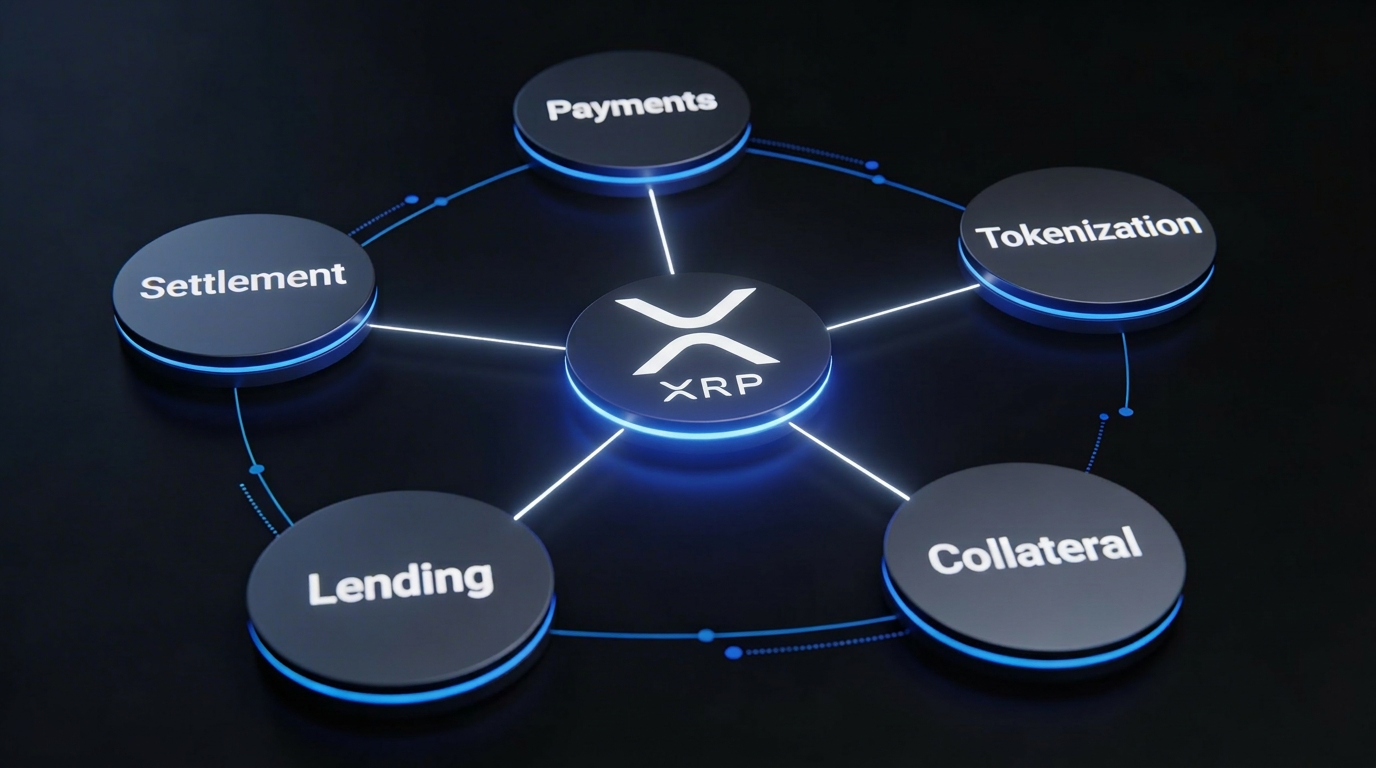
"The reality is that XRP was designed for more. Tokenization, lending, collateral, settlement. One ledger and one asset doing the bridging."
And its conclusion struck an institutional tone rarely seen from crypto-native voices:
"We believe no other network combines all of these capabilities natively with the level of regulatory clarity that institutions require."
This framing — XRP as a complete financial operating system, not just a payments token — aligns precisely with Evernorth's business model. Evernorth is designed to provide investors with simple, liquid, and transparent exposure to XRP through a publicly listed vehicle, and unlike a passive ETF, Evernorth seeks to grow XRP per share over time by participating in institutional lending, liquidity provisioning, and DeFi yield opportunities.
The company is not a speculative bet. The transaction, announced October 20, 2025, is expected to raise over $1 billion in gross proceeds, including $200 million from SBI, with additional investments from Ripple, Pantera Capital, Kraken, and GSR — with participation from Ripple co-founder Chris Larsen.
The combined company is expected to trade on Nasdaq under the ticker symbol "XRPN," with the transaction expected to close in Q1 2026.
The Infrastructure Is There — And It's Growing
Evernorth's claims aren't being made in a vacuum. A significant body of on-chain development supports the "full financial stack" thesis.
Payments: The foundational use case. The XRP Ledger offers low-cost transactions ($0.0002 per transaction), speed (3–5 seconds finality), and scalability (1,500 transactions per second) — advantages that underpin its appeal for cross-border payments and remittances.
Tokenization: By late 2025, total tokenized asset value on the XRP Ledger reached approximately $394.6 million, and weekly payment transactions increased more than 430%, surpassing 8 million transactions for the year. The broader RWA market context matters here too — the broader RWA tokenization market has grown to $35–36 billion on-chain, nearly 10x since 2022.
Lending: On January 28, 2026, the XLS-66d amendment entered validator voting following the release of XRPL version 3.1.0 — introducing structured lending tools built for professional capital, including fixed loan terms, transparent settlement, and isolated risk design through Single Asset Vault XRP structures.
Privacy & Compliance: Multi-Purpose Token Confidential Transfers are scheduled for release in Q1 2026, enabling institutions to handle tokenized assets without compromising regulatory requirements by using zero-knowledge proofs. A Permissioned DEX — connecting XRPL to decentralized exchange within regulated environments with KYC and AML checks — is planned for Q2 2026.
With lending, compliance, programmability, and tokenization converging, XRPL is emerging as the leading chain for institutional finance. Over the last year, the XRP Ledger has broken into the Top 10 chains for real-world assets, reached its first $1B+ month in stablecoin volume, and cemented its role as a settlement layer trusted by both crypto-native firms and regulated financial institutions.
Commentary That Echoes Evernorth's Thesis
Evernorth isn't alone in making this argument. Industry analysts and blockchain researchers have been reaching similar conclusions from multiple angles.
One XRP community member recently highlighted a major shift happening across the network, arguing that XRPL is positioning itself as far more than a tokenization platform — with native on-chain privacy, permissioned markets, and institutional lending expected to go live in the coming months, XRPL is moving toward becoming an end-to-end operating system for real-world finance.
From the traditional finance side, 21Shares research offers this framing of XRP's long-term role: by 2030, global finance is projected to operate on hybrid rails that seamlessly combine tokenized bank deposits and assets, regulated fiat-backed stablecoins, and interoperable settlement layers — and in this environment, the XRPL serves as a neutral bridge where liquidity, speed, and compliance are prioritized.
On Ripple's own institutional push, CCN analysis notes: more than $2.7 billion directed toward acquisitions such as Hidden Road, Rail, and GTreasury has broadened Ripple's reach across payments, settlement, and treasury infrastructure — signaling a shift toward building a full-stack financial services platform designed for institutional use.
And on the interoperability question that Evernorth's statement touches on: Ripple positions XRP as a bridge asset designed to facilitate value transfer across networks that do not share a common settlement rail — entering the tokenization debate at the interoperability layer rather than at the deposit or issuance level.
XRP & Ripple: The Regulatory Foundation Others Can't Claim
One phrase in Evernorth's X post deserves particular attention:
"the level of regulatory clarity that institutions require."
This is the differentiator Ripple has spent years — and considerable legal resources — establishing. The August 2025 resolution of XRP's long-running SEC case removed the structural overhang that had capped XRP's price for years — and once lifted, the market repriced rapidly, pushing XRP to a new all-time high of $3.66 before consolidating, with the former $2.00 resistance level now acting as a durable support floor.
XRP presents a compelling opportunity as one of the few digital assets with a recognized regulatory framework in the U.S. and a proven use case in powering global payments. With over a decade of uptime, deep liquidity, and a growing DeFi ecosystem, XRP is uniquely positioned for growth and broader institutional adoption.
Evernorth CEO Asheesh Birla summarized Evernorth's strategic position in the original press release:
"As we capitalize on existing TradFi yield generation strategies and deploy into DeFi yield opportunities, we also contribute to the growth and maturity of that ecosystem. This approach is designed to generate returns for shareholders while supporting XRP's utility and adoption. It's a symbiotic model: our strategy is designed to align with the growth of the XRP ecosystem."
Ripple CEO Brad Garlinghouse added:
"Evernorth is deeply aligned with that mission, bringing more use cases, participation, and confidence to the XRP ecosystem."
What to Watch
- XRPN Nasdaq listing: The Evernorth SPAC deal with Armada Acquisition Corp II (AACI) was expected to close Q1 2026. Any formal trading launch will be a milestone for institutional XRP exposure.
- XLS-66 lending protocol activation: All 34 XRPL validators entered voting in late January 2026. Activation requires 80% consensus sustained over two consecutive weeks — monitor XRPL Known Amendments for live voting status.
- Permissioned DEX & Confidential MPTs: Slated for Q1–Q2 2026, these upgrades will be the first real-world test of XRPL's privacy and compliance claims for institutional clients.
- RLUSD stablecoin adoption: Ripple's USD-backed stablecoin RLUSD has hit a $1.26 billion market cap in less than a year. Its continued growth underpins the collateral and DeFi utility arguments that Evernorth is building around.
The Bigger Picture
Evernorth's March 20 statement isn't hype — it's a thesis statement from a company putting over $1 billion behind it. The framing of XRP as not just a payment rail, but as tokenization infrastructure, lending collateral, settlement layer, and bridge asset — all in one — is a narrative shift that may take time to price in, but the institutional infrastructure being built around it is very real.
Whether that narrative translates into sustained price recovery from today's ~$1.45 level remains to be seen, and will depend heavily on protocol activations, RLUSD adoption, and whether the XRPN listing delivers real institutional inflows.
But one thing is increasingly difficult to dispute: the architecture Evernorth is describing already exists. The question is whether the market will recognize it before institutions quietly build on top of it.
DISCLAIMER: This newsletter is for informational purposes only and does not constitute investment advice, advertising, or a recommendation to buy, sell, or hold any securities. This content is not sponsored by or affiliated with any of the mentioned entities. Investments in cryptocurrencies or other financial assets carry significant risks, including the potential for total loss, extreme volatility, and regulatory uncertainty. Past performance is not indicative of future results. Always consult a qualified financial professional and conduct thorough research before making any investment decisions.
Sources
| # | Source | Description |
|---|---|---|
| 1 | Evernorth Press Release — Oct. 20, 2025 | Official announcement of Evernorth SPAC deal, $1B raise, and XRP treasury model |
| 2 | Evernorth on X — March 20, 2026 | Primary source for Evernorth's "full financial stack" statement |
| 3 | CoinDesk — XRP Price, March 20, 2026 | Current XRP price and market data |
| 4 | Ripple Insights — The Next Phase of Institutional DeFi on XRPL | Official Ripple blog on lending protocol, ZKPs, and MPTs |
| 5 | CaptainAltcoin — XRPL Is Turning Into a Full Financial Operating System | Analysis of XRPL's evolving infrastructure stack (Feb. 2026) |
| 6 | 21Shares — XRP 2026 Outlook: Institutional Rails and Cross-Border Settlement | Institutional research firm analysis of XRP's 2026 positioning |
| 7 | 24/7 Wall St. — XRPL Lending Protocol Could Attract Institutional Capital | XLS-66 validator voting details and price implications (Feb. 2026) |
| 8 | CCN — Beyond XRP Price: Why Ripple Matters in 2026 | Analysis of Ripple's $2.7B acquisitions and full-stack strategy |
| 9 | CCN — XRP's Role in 2026 Banking: Tokenized Deposits and Interoperability | XRP as bridge asset in tokenized deposit ecosystem |
| 10 | BingX — What Is XRP Ledger Tokenization and Why Is It Growing in 2026 | On-chain RWA data and XRPL tokenization milestones |
| 11 | Live Bitcoin News / Ripple — XRP Lending Protocol and Privacy Features | Q1–Q2 2026 XRPL roadmap details |
| 12 | XRPL Known Amendments Tracker | Live validator voting status for XLS-66 and other amendments |