Why XRP's First Institutional Yield Protocol Could Change Everything for Holders

Evernorth's backing of the XRP Lending Protocol isn't just another DeFi experiment—it's bringing Wall Street-grade yield infrastructure to a $115 billion asset that's never had it. Here's what it means.
For over a decade, XRP holders have faced a frustrating reality: unlike Ethereum stakers or traditional bond investors, there's been no native way to earn yield on their holdings. That's about to change.
On January 29, 2026, Evernorth—the soon-to-be-public XRP treasury company backed by over $1 billion in funding from SBI Holdings, Ripple, Pantera Capital, and Kraken—announced its intent to utilize the upcoming XRP Lending Protocol (XLS-66). The move signals that institutional-grade yield opportunities for XRP are transitioning from theoretical possibility to operational reality.
The Traditional Finance Problem XRP Holders Face
In traditional finance, institutional investors have access to a mature fixed-income ecosystem. When a pension fund, insurance company, or corporate treasury holds cash or securities, they can generate yield through:
- Corporate bonds paying fixed interest rates (typically 3-7% for investment-grade debt)
- Money market funds offering low-risk returns (currently around 4-5%)
- Private credit markets providing higher yields of 8-12% through direct lending
- Securities lending programs that generate passive income
According to Wikipedia's fixed income definition, these instruments provide "constant and secure return" through predictable payment schedules—exactly what institutional treasuries need.
XRP holders have had none of this. Unlike Proof-of-Stake networks that offer staking rewards, or traditional assets with established lending markets, XRP's $115+ billion market cap has largely sat idle—either in cold storage or on exchanges, generating zero return.
How the XRP Lending Protocol Works
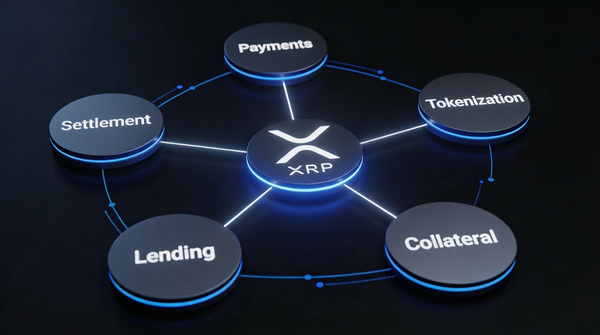
The XRP Lending Protocol (XLS-66), which entered validator voting on January 29, 2026 following the XRPL v3.1.0 release, introduces fixed-term, fixed-rate lending directly at the protocol level—not through smart contracts, but as a native ledger feature.
The key components:
Single Asset Vaults (SAVs): Isolated pools holding only one asset (XRP, RLUSD, or other tokens). Each vault operates independently, preventing risk contagion between different assets.
Fixed Terms & Rates: Unlike DeFi's variable-rate lending, the protocol enables institutional-style credit with predetermined interest rates and repayment schedules—mirroring how corporate bonds work.
Native Protocol Integration: According to RippleX's announcement, the lending logic is embedded directly into the XRP Ledger itself, eliminating smart contract risks that have plagued other DeFi platforms.
Off-Chain Underwriting: Professional credit assessment happens outside the blockchain, but loan enforcement, repayments, and interest calculations are handled by the protocol—combining TradFi's risk management with blockchain's transparency.
Why Evernorth's Participation Matters
Evernorth, led by former Ripple executive Asheesh Birla, isn't just experimenting—it's building its business model around this infrastructure. The company holds over 388 million XRP tokens (approximately $812 million at current prices) and plans to actively grow "XRP per share" through institutional and DeFi yield strategies.
In their January 29 blog post, Chief Business Officer Sagar Shah outlined why Evernorth chose native lending over alternatives:
Tax Efficiency: Bridging XRP to other chains often triggers taxable events in many jurisdictions. Native lending avoids this entirely.
Security: The protocol inherits the XRP Ledger's 13 years of operational history rather than introducing new smart contract risks.
Operational Simplicity: Native protocol features eliminate the "triple database problem" where lenders, borrowers, and intermediaries maintain separate records, creating reconciliation nightmares.
Traditional Finance vs. XRP Lending: The Practical Differences
| Aspect | TradFi Fixed Income | XRP Lending Protocol |
|---|---|---|
| Settlement Time | T+2 to T+3 days | Near-instant on-chain |
| Minimum Investment | Often $100K-$1M+ | Potentially accessible at any amount |
| Custody | Third-party custodians | Self-custody or institutional grade |
| Transparency | Quarterly reports | Real-time on-chain visibility |
| Geographic Access | Jurisdiction-limited | Global, permissionless (with compliance layers) |
| Intermediaries | Banks, brokers, clearinghouses | Protocol-native, minimal friction |
What This Means for XRP Holders
For individual holders, the protocol could eventually enable yield generation on XRP that's been sitting dormant. While initial deployments will likely target institutional participants, the infrastructure creates a foundation for broader access.
For institutional holders—exchanges, custodians, market makers, and corporate treasuries—this represents the first scalable, compliant way to generate returns on XRP holdings without the operational complexity of manual lending arrangements.
According to validator Vet's assessment, the development is "massive for XRP" because it expands the ledger's utility beyond payments into structured credit markets.
Reality Check: Challenges & Unknowns
Important caveats that must be acknowledged:
Not Yet Live: The protocol is currently in validator voting phase. Approval is expected but not guaranteed.
Yield Rates Unknown: Evernorth's blog mentions "target benchmark yield" but no specific rates have been disclosed. Returns will depend on borrower demand, underwriting standards, and market conditions.
Underwriting Risk: While the protocol handles enforcement, loan defaults are still possible. The system relies on off-chain credit assessment and "First-Loss Capital" protection schemes to absorb losses.
Regulatory Uncertainty: While XRP has regulatory clarity in the U.S. following its SEC case resolution, lending protocols may face additional compliance requirements.
Market Maturity: As Anodos Finance CEO Panos Mekras noted, extensive testing and experimentation are needed before large-scale institutional adoption.
The Broader Implications
If successfully implemented, the XRP Lending Protocol could fundamentally alter XRP's value proposition. Instead of a purely speculative or payment-focused asset, XRP would function as productive capital—similar to how bonds, money market funds, and private credit operate in traditional finance.
Ripple has already demonstrated commitment to the infrastructure, hosting a $200,000 "Attackathon" with Immunefi in October 2025 to stress-test the protocol's security.
As industry commentator Zach Rector stated, many in crypto are "sleeping on" the XRP Ledger's DeFi capabilities—but institutional players like Evernorth are clearly paying attention.
What Comes Next
The timeline for full deployment remains uncertain. Evernorth expects to complete its SPAC merger and list on Nasdaq under ticker XRPN in Q1 2026, providing a regulated vehicle for investors to gain XRP exposure with yield generation strategies.
For XRP holders watching from the sidelines, the key question isn't whether this represents an incremental improvement—it's whether native, institutional-grade lending infrastructure can transform a $115 billion asset class from dormant capital into a productive component of the digital finance ecosystem.
The answer will depend on validator approval, institutional adoption rates, and whether the protocol can deliver competitive yields while managing credit risk. But for the first time in XRP's history, the infrastructure to try is actually being built.
Sources
- Evernorth Blog Post - January 29, 2026
- XRP Lending Protocol Specification (XLS-66) - XRPL Foundation
- XRPL v3.1.0 Release & Validator Voting - The Crypto Basic
- Evernorth IPO Announcement - PR Newswire, October 20, 2025
- RippleX XLS-66 Announcement - X/Twitter
- The XRPL Lending Protocol Explained - Crypto Forem
- Ripple $200K Attackathon - CoinDesk, October 16, 2025
- Fixed Income Investments - Wikipedia
- Private Credit & Direct Lending - CAM Investor Solutions
DISCLAIMER: This newsletter is for informational purposes only and does not constitute investment advice, advertising, or a recommendation to buy, sell, or hold any securities. This content is not sponsored by or affiliated with any of the mentioned entities. Investments in cryptocurrencies or other financial assets carry significant risks, including the potential for total loss, extreme volatility, and regulatory uncertainty. Past performance is not indicative of future results. Always consult a qualified financial professional and conduct thorough research before making any investment decisions.