SEC Chair Pushes On-Chain Capital Revolution
SEC Chair Paul Atkins declares crypto entrepreneurs should raise capital on-chain "without endless legal uncertainty" as Project Crypto transforms U.S. digital asset regulation. A seismic shift from enforcement to innovation-friendly policies.
SEC Chair Paul Atkins declares crypto entrepreneurs should raise capital on-chain "without endless legal uncertainty" as Project Crypto transforms U.S. digital asset regulation.
In a landmark keynote address to the Organization for Economic Co-operation and Development on September 10, 2025, SEC Chair Paul Atkins delivered what many consider the most pro-crypto regulatory statement from America's top securities regulator in history. Atkins said entrepreneurs and investors should be able to raise capital on-chain "without endless legal uncertainty."
The statement marks a seismic shift from the enforcement-heavy approach that characterized the previous administration. "For too long, the SEC has weaponized its investigatory, subpoena, and enforcement authorities to subvert the crypto industry," Atkins said. "That approach was not only ineffective, but injurious; it drove jobs, innovation, and capital overseas."
Project Crypto: A New Regulatory Framework
Atkins unveiled "Project Crypto," a comprehensive initiative to modernize securities regulations and enable America's financial markets to move on-chain. The SEC is working to "modernize the securities rules and regulations to enable our markets to move on-chain," including providing clearer guidelines regarding the "security status of crypto assets."
The initiative addresses several critical areas that have plagued crypto entrepreneurs for years. Most significantly, Atkins reaffirmed that "most crypto tokens are not securities" and announced plans to allow trading platforms to offer trading, lending, and staking services "under a single regulatory umbrella."
This "super-app" approach could revolutionize how crypto platforms operate in the United States. "We must allow for 'super-app' trading platform innovation that increases choice for market participants," Atkins emphasized, referencing successful models like WeChat and Alipay that have dominated Asian markets.
Market and Legal Context
The timing of Atkins' announcement coincides with significant legislative momentum on Capitol Hill. Congress has already passed the GENIUS Act regarding stablecoins and is making progress on the CLARITY Act, which would determine whether the SEC or CFTC oversees various digital asset markets.
"I believe regulators should provide the minimum effective dose of regulation needed to protect investors, and no more," Atkins stated, signaling a dramatic departure from the previous administration's approach that many industry leaders criticized as hostile to innovation.
The regulatory shift comes as the crypto industry has demonstrated resilience and continued growth despite years of regulatory uncertainty. Major institutional players, including BlackRock and other traditional financial giants, have increasingly embraced digital assets through ETF products and tokenization initiatives.
XRP and Ripple: A Case Study in Regulatory Change
The implications for XRP and Ripple are particularly significant, given the company's protracted legal battle with the SEC. Under previous leadership, the SEC pursued an aggressive case against Ripple, alleging that XRP sales constituted unregistered securities offerings. However, the regulatory landscape has shifted dramatically since Atkins assumed leadership.
Atkins called the Ripple lawsuit's conclusion a "turning point" for U.S. regulation, emphasizing moving the SEC's focus "from the courtroom to the policy drafting table." This approach represents a fundamental philosophical shift that could benefit not just Ripple, but the entire digital asset ecosystem.
For XRP specifically, the new regulatory clarity could unlock several key opportunities:
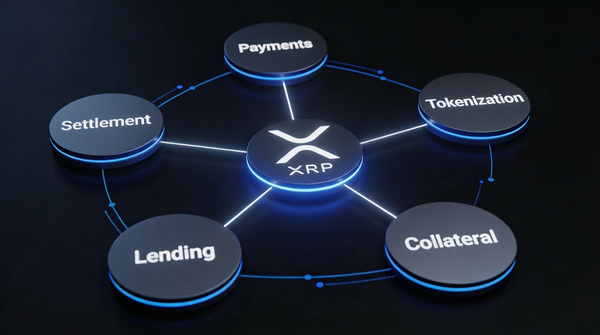
Price Potential: With regulatory uncertainty diminishing, XRP could see renewed institutional interest. An official end to the Ripple case could pave the way to an XRP-spot ETF market, potentially boosting XRP demand.
Business Operations: Ripple's cross-border payment solutions could gain wider adoption as banks and financial institutions feel more confident about regulatory compliance.
Partnership Opportunities: Clear regulatory guidelines could enable Ripple to pursue partnerships with traditional financial institutions that previously remained cautious due to regulatory uncertainty.
Market Position: As one of the few major cryptocurrencies with legal clarity, XRP could become a preferred choice for institutional investors seeking regulatory certainty.
Broader Crypto Market Impact
Atkins' vision extends far beyond individual tokens to encompass a complete transformation of how America approaches digital finance. "Our goal is simple: to spark a golden age of financial innovation on U.S. soil," Atkins said. "Whether through tokenized stock ledgers or entirely new asset classes, we want breakthroughs to be made in America's markets."
The announcement comes as Bitcoin recently reached $103,000, and the broader crypto market has shown renewed vitality. The SEC's new approach could accelerate institutional adoption, particularly as traditional financial services integrate blockchain technology into their operations.
Initial Coin Offerings (ICOs), which were effectively banned under previous SEC leadership, could make a comeback under new guidelines. Atkins has directed SEC staff to propose "purpose-fit disclosures, exemptions, and safe harbors, including for so-called 'initial coin offerings,' 'airdrops,' and network rewards."
Looking Forward: Implementation and Timeline
While Atkins' announcements signal a clear directional shift, implementation will require careful coordination across multiple regulatory agencies. The SEC and CFTC have announced a joint roundtable for September 29, 2025, to discuss bringing "innovative products," such as perpetual contracts and decentralized finance, back to America.
The success of Project Crypto will depend on the SEC's ability to balance innovation with investor protection—a challenge that has historically proven difficult for regulatory agencies worldwide. However, Atkins' background in both traditional finance and digital assets positions him uniquely to navigate these complexities.
For the crypto industry, the message is clear: America is open for digital asset business. After years of regulatory hostility that drove innovation overseas, the United States appears poised to reclaim its position as a global leader in financial technology innovation.
The transformation from "regulation by enforcement" to "regulation by guidance" represents more than a policy shift—it's a fundamental reimagining of how America can lead in the digital economy while maintaining appropriate investor protections.