Ripple Partner Securitize to Launch First Compliant Onchain Stock Trading in Q1 2026
Securitize announces Q1 2026 launch of fully compliant onchain stock trading—real shares, not derivatives—while Ripple's RLUSD integration positions XRPL as emerging institutional tokenization infrastructure. What this means for public equity markets.
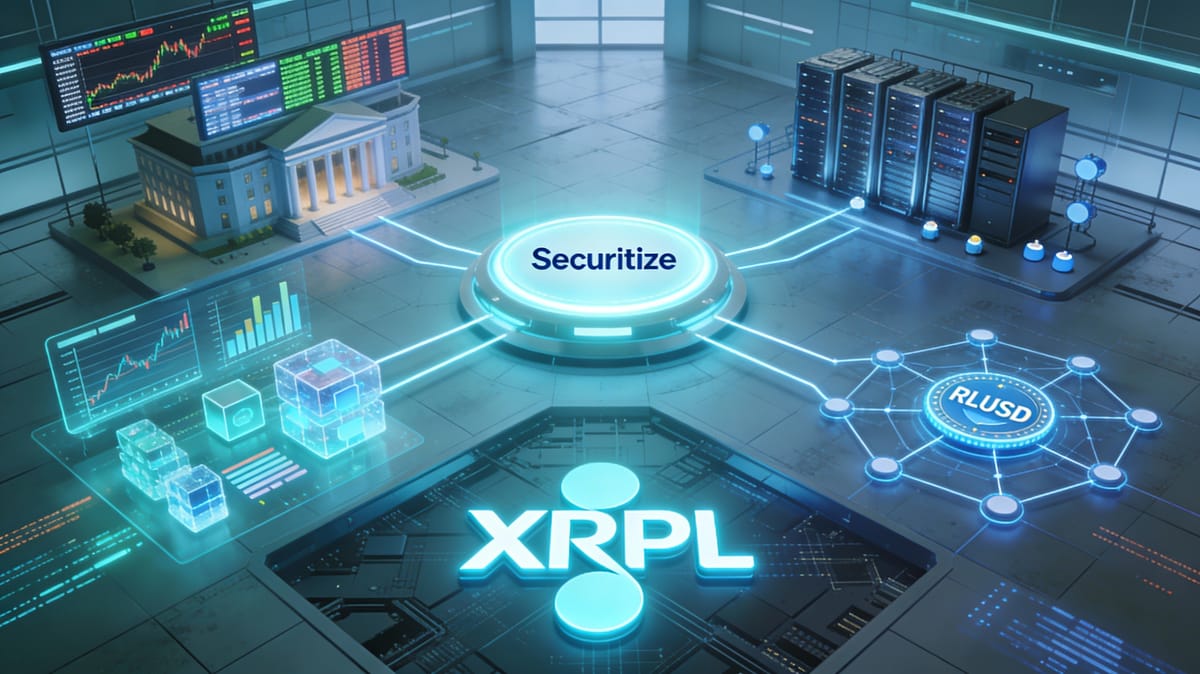
Securitize has announced plans to launch what it describes as the first fully compliant, blockchain-based trading venue for natively tokenized public equities in the first quarter of 2026. Unlike existing "tokenized stock" products that typically represent derivative instruments, Securitize's platform will enable investors to hold and trade actual company shares with full shareholder rights—all recorded and transferred directly on the blockchain.
Introducing: Stocks on Securitize
— Securitize (@Securitize) December 16, 2025
Real Stocks. Real Ownership.
Trading onchain. For the first time ever. pic.twitter.com/ZpwL42usug
Breaking From Synthetic Stock Models
The announcement positions Securitize's approach as fundamentally different from current tokenized equity offerings in the market. According to the company's blog post, most existing "tokenized stocks" are derivatives or special purpose vehicle (SPV)-based instruments that track stock prices but do not convey genuine ownership, voting rights, or direct placement on a company's capitalization table. These synthetic structures, Securitize argues, introduce compliance uncertainties and counterparty risks that traditional shareholders do not face.
In contrast, Securitize's model makes the blockchain token itself the legally recognized share. As an SEC-registered transfer agent, Securitize maintains the official ownership record onchain, meaning investors who purchase stocks through the platform will appear directly on the issuer's cap table and receive standard shareholder benefits including dividend payments and proxy voting rights. Importantly, investors retain self-custody of their tokenized shares, which cannot be lent out or rehypothecated without explicit consent—a departure from typical brokerage arrangements.
Building on the Exodus Precedent
Securitize's announcement builds on a December 2024 milestone when Exodus Movement (NYSE: EXOD) became the first public company to issue its equity natively onchain through Securitize's infrastructure. That initial deployment proved the technical and regulatory viability of maintaining public-company stock ownership directly on a blockchain while preserving investor protections and compliance with securities regulations.
The Exodus case demonstrated that real, legally binding share ownership could exist entirely onchain without requiring traditional paper certificates or centralized databases maintained by legacy transfer agents. However, until now, trading these natively tokenized shares still occurred through conventional, offchain processes. The Q1 2026 launch aims to complete the circuit by enabling peer-to-peer, onchain trading through a Web3-style swap interface while maintaining compliance with public-market trading rules.
How the Platform Will Work
According to Securitize's description, investors will be able to transfer tokens directly between whitelisted, KYC-verified wallets, with the blockchain serving as the authoritative ownership record. The platform is designed to support real-time buying and selling while adhering to market integrity standards and investor protection requirements that govern public securities trading.
The company emphasizes that issuer participation is required for stocks to be available on the platform, meaning the initial universe of tradeable securities will be limited to companies that opt into this onchain equity structure. Securitize expects adoption to grow as both issuers and investors gain experience with the benefits of blockchain-based ownership, including enhanced transparency, faster settlement, and programmable compliance features.
Broader Market Implications
The announcement arrives at a moment when tokenization of traditional financial assets has gained momentum across the industry. Major financial institutions including BlackRock and Franklin Templeton have launched tokenized money market funds, while experimental tokenized treasury and bond products have emerged from multiple providers.
However, tokenized public equities remain relatively nascent, with most existing offerings using derivative structures rather than native blockchain issuance. If Securitize's model proves successful at scale, it could establish a template for other companies to move their equity onchain, potentially transforming how public stocks are issued, held, and traded.
Regulatory and Adoption Challenges
While Securitize's SEC-registered status provides a compliance framework, questions remain about how regulators will view widespread adoption of natively tokenized public equities, particularly regarding market surveillance, reporting requirements, and investor protection in a decentralized environment. The company has indicated it plans to share its approach with both DeFi developers and regulators to encourage "responsible" tokenization practices rather than keeping the model proprietary.
The requirement for issuer participation also presents an adoption barrier. Public companies must actively choose to tokenize their equity and work with Securitize's infrastructure, which requires management buy-in, shareholder approval processes, and potentially complex migrations from traditional transfer agent systems. The pace of adoption will depend heavily on whether corporate leadership teams see sufficient benefits to justify the operational changes involved.
Ripple's Strategic Partnership with Securitize
Ripple and Securitize have established a significant partnership that directly connects to the broader tokenization ecosystem Securitize is building. In September 2025, Ripple announced a collaboration enabling holders of BlackRock's BUIDL and VanEck's VBILL tokenized treasury funds to instantly exchange their shares for Ripple's RLUSD stablecoin through smart contracts on Securitize's platform.
This partnership positions Ripple as a key liquidity provider within Securitize's tokenization infrastructure. According to Jack McDonald, Senior Vice President of Stablecoins at Ripple, "Making RLUSD available as an exchange option for tokenized funds is a natural next step as we continue to bridge traditional finance and crypto." RLUSD, which launched in late 2024, had grown to approximately $741 million in market capitalization by September 2025.
Critically, Securitize has confirmed plans to integrate with the XRP Ledger (XRPL), which could expand the utility of Ripple's native blockchain within the institutional tokenization space. As Carlos Domingo, CEO of Securitize, stated, "Partnering with Ripple to integrate RLUSD into our tokenization infrastructure is a major step forward in automating liquidity for tokenized assets."
XRP and XRPL: Direct Implications for Tokenized Equities
The Ripple-Securitize partnership creates concrete pathways for XRP Ledger technology to play a role in the tokenized securities ecosystem, though the extent of this integration with public equities specifically remains to be seen.
Confirmed Developments:
XRPL Integration Underway: Securitize's announced integration with the XRP Ledger represents a significant expansion of the ledger's institutional use cases. This integration aims to bring "new utility and expanded access to the XRPL ecosystem," according to Ripple's September 2025 announcement.
Infrastructure Advantages: The XRP Ledger's technical capabilities—including 3-5 second settlement times, low transaction costs (fractions of a cent), and native tokenization features—align well with the requirements for efficient securities trading. XRPL has processed over 2.8 billion transactions without network failure, demonstrating reliability critical for financial infrastructure.
Existing RWA Activity: XRPL has already attracted institutional adopters for real-world asset tokenization, including partnerships with Archax (UK's FCA-regulated digital securities exchange), which aims to tokenize over $1 billion in assets on XRPL by mid-2026. Additional institutional participants include Guggenheim, VERT, and Dubai Land Registry.
Technical Roadmap: Ripple has published an updated XRPL roadmap including a native lending protocol scheduled for Version 3.0.0, zero-knowledge privacy features targeting mid-2026 deployment, and enhanced DeFi capabilities specifically designed for institutional use.
Potential Applications for Tokenized Public Equities:
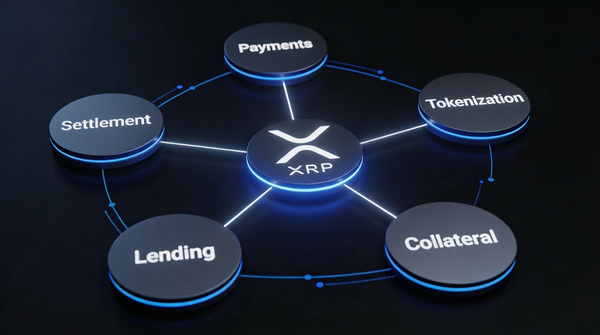
Settlement Infrastructure: XRPL could theoretically serve as the underlying blockchain for Securitize's tokenized public equities, leveraging its fast settlement times and low costs. However, Securitize has not disclosed which blockchain networks will host its tokenized stocks, and the company has historically used Ethereum-compatible infrastructure.
Liquidity Mechanisms: If tokenized equities are issued on multiple blockchains, XRPL's Wormhole integration (announced June 2025) could enable cross-chain transfers between different tokenization platforms. This interoperability could be valuable as the tokenized securities market fragments across multiple networks.
Stablecoin Settlement: RLUSD's existing integration with Securitize's platform for treasury funds could extend to equity securities, providing a compliant stablecoin for trade settlement. This would offer 24/7 liquidity for buying and selling tokenized stocks without relying on traditional banking hours or legacy payment rails.
Institutional DeFi: XRPL's planned native lending protocol could enable tokenized equity holders to use their shares as collateral for onchain loans, creating new liquidity options while maintaining compliance through built-in permissioned features.
Important Caveats:
No Confirmed Equity Plans: Neither Securitize nor Ripple has announced specific plans to issue tokenized public equities on XRPL. The current partnership focuses on treasury funds and stablecoins, not equity securities.
Regulatory Uncertainty: Tokenized public equities face different regulatory requirements than treasury funds or stablecoins. Whether regulators will approve XRPL as a suitable network for regulated stock trading remains unclear, particularly given questions about decentralization, validator control, and compliance mechanisms.
Technical Requirements: Public equity trading requires specific infrastructure including market surveillance, circuit breakers, reporting systems, and real-time price discovery mechanisms that may not exist natively on XRPL. Building this infrastructure would require significant additional development.
Competition: Ethereum currently dominates the tokenized RWA space with established infrastructure, developer tools, and institutional adoption. XRPL would need to demonstrate clear advantages to convince issuers to choose it over Ethereum or other established networks.
Market Impact Speculation:
For XRP holders, Securitize's tokenized equity platform could theoretically increase demand for XRP in several scenarios, though all remain speculative:
- Bridge Currency Use: If XRPL hosts tokenized equities, XRP could potentially serve as a bridge asset for converting between different tokenized securities or for cross-border equity transactions, similar to its current role in Ripple's payment network.
- Network Activity: Increased tokenized securities activity on XRPL would drive transaction volume, requiring XRP for fees (though XRPL transaction fees are negligible). More significantly, it could increase demand for XRP as collateral in DeFi applications built around tokenized assets.
- Institutional Validation: Major companies tokenizing equity on XRPL would represent institutional endorsement of the network's capabilities, potentially attracting additional financial institutions and driving broader XRP adoption.
However, these scenarios face significant barriers. Most importantly, Securitize has not indicated plans to prioritize XRPL for equity tokenization over Ethereum or other networks. The company's initial XRPL integration appears focused on expanding options for existing tokenized funds rather than migrating its entire platform. Additionally, equity tokenization may generate minimal direct XRP demand since transaction fees on XRPL are extremely low (fractions of a cent), and the platform does not require XRP holdings to issue or trade tokens.
Conclusion
Securitize's planned Q1 2026 launch represents an ambitious attempt to bring fully compliant, natively tokenized public equity trading to market. By positioning blockchain tokens as legal shares with complete shareholder rights, the company aims to transcend the limitations of synthetic stock derivatives while maintaining regulatory compliance.
The Ripple-Securitize partnership adds an important dimension to this development. Ripple's RLUSD stablecoin integration and Securitize's planned XRPL adoption create potential pathways for XRP Ledger technology to participate in the tokenized securities ecosystem. The confirmed infrastructure developments—XRPL integration, institutional RWA partnerships, and technical roadmap enhancements—demonstrate meaningful progress toward positioning XRPL as a viable network for institutional finance.
However, whether Securitize's tokenized public equities will actually utilize XRPL remains unconfirmed, and significant technical, regulatory, and competitive hurdles must be addressed. The Exodus Movement precedent demonstrates technical viability of native onchain equity issuance, but widespread adoption will depend on issuer participation, regulatory clarity, investor demand, and whether the benefits of blockchain-based ownership outweigh the complexities of migrating from traditional systems.
For the XRP ecosystem, Securitize's broader tokenization efforts represent opportunity rather than certainty. The platform's growth in traditional asset tokenization (currently over $4 billion in tokenized assets) and planned public listing via SPAC merger in H1 2026 at a $1.25 billion valuation underscore institutional confidence in tokenization infrastructure. Whether this translates to material XRP adoption will become clearer as the tokenized equity platform launches and the XRPL integration progresses through 2026.
DISCLAIMER: This newsletter is for informational purposes only and does not constitute investment advice, advertising, or a recommendation to buy, sell, or hold any securities. This content is not sponsored by or affiliated with any of the mentioned entities. Investments in cryptocurrencies or other financial assets carry significant risks, including the potential for total loss, extreme volatility, and regulatory uncertainty. Past performance is not indicative of future results. Always consult a qualified financial professional and conduct thorough research before making any investment decisions.
Sources
Primary Sources:
- Securitize: Tokenized Equities: Real Stocks Meet Onchain Trading
- Ripple: RLUSD Smart Contract Functionality for BlackRock's BUIDL and VanEck's VBILL
- SEC EDGAR - Exodus Movement Inc.
Partnership and Integration Coverage:
- Crypto News: Ripple to Add Stablecoin Off Ramp for BlackRock, VanEck
- CryptoSlate: BlackRock's $2 Billion BUIDL Fund May Soon Expand to XRP Ledger
- Cryptopolitan: Ripple Partners with Securitize for Asset-Backed Minting of RLUSD
- The Block: Ripple Expands XRPL Interoperability with Wormhole Integration
Technical Development and Roadmap:
- Crypto Briefing: Ripple Unveils XRPL's Updated Roadmap with Native Lending Protocol
- 24/7 Wall St.: Ripple-Archax Target $1B+ in Tokenized Assets on XRPL by Mid-2026
Industry Context: