Ripple Goes Banking: CEO Confirms Federal Charter Pursuit
Ripple makes history by applying for federal banking charter while pursuing Fed Master Account access. CEO Brad Garlinghouse confirms dual state-federal oversight strategy that could revolutionize stablecoin trust standards and accelerate institutional crypto adoption
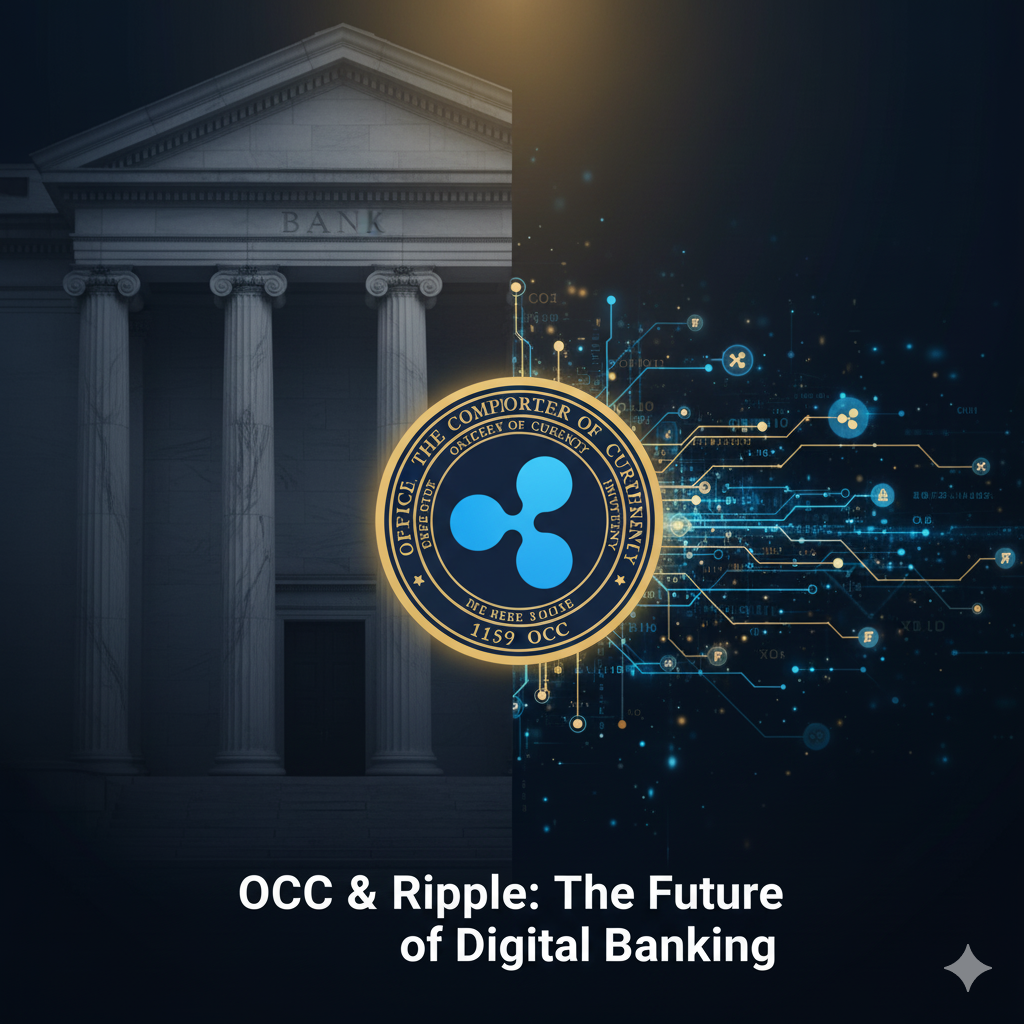
Ripple has officially entered the race for U.S. banking legitimacy, with CEO Brad Garlinghouse confirming the company's application for a national bank charter from the Office of the Comptroller of the Currency (OCC). The move positions Ripple alongside a select group of crypto firms seeking federal oversight—and could fundamentally reshape how traditional finance views digital assets.
🚨Ripple CEO Brad Garlinghouse confirms they’re pursuing a U.S. banking charter, OCC license + Fed Master Account 👀🏦
— BULLRUNNERS (@BullrunnersHQ) September 18, 2025
“We’re not anti-regulation. We want in — the right way.” #XRP #XRPCommunity pic.twitter.com/het4IRCRmN
The Historic Application
On July 2, 2025, Garlinghouse announced via X that Ripple has applied for a national bank charter from the OCC, stating "True to our long-standing compliance roots, @Ripple is applying for a national bank charter from the OCC. If approved, we would have both state (via NYDFS) and federal oversight, a new (and unique!) benchmark for trust in the stablecoin market."
The application represents more than just regulatory compliance—it's a strategic play for market dominance in the rapidly evolving stablecoin sector. With Ripple already holding a New York Department of Financial Services BitLicense for its RLUSD stablecoin, the federal charter would create dual oversight, positioning Ripple as the first stablecoin issuer with both state and federal supervision.
But Ripple didn't stop there. Through its subsidiary Standard Custody, the company simultaneously applied for a Federal Reserve Master Account, which would grant direct access to the Fed's payment rails and allow Ripple to hold RLUSD reserves directly with the central bank.
Regulatory Tailwinds: The GENIUS Act Connection
Ripple's timing appears calculated to leverage the new regulatory landscape. The Senate passed the GENIUS Act on June 17, 2025, with a bipartisan vote of 68–30, establishing the first comprehensive federal framework for stablecoins. The legislation was subsequently signed into law by President Trump on July 18, 2025, following House passage with a vote of 308–122.
Under the GENIUS Act, stablecoin issuers with more than $10 billion in outstanding tokens will be regulated by the Federal Reserve (for banks) and the OCC (for nonbanks), while smaller issuers can opt for state regulation if their state's framework is deemed "substantially similar" to federal requirements.
The regulatory clarity couldn't come at a better time for Ripple's RLUSD stablecoin, which currently ranks as the ninth-largest stablecoin with a market capitalization of $469 million.
Market Impact: XRP Surges on Banking News
The market's response was immediate and decisive. XRP rose 3% following initial reports of the banking license application, with subsequent trading sessions showing sustained momentum. XRP broke above the $2.28 resistance zone with a 2.36% gain, supported by surging trading volume exceeding 67 million in peak hours.
The price action reflects deeper market confidence in Ripple's strategic positioning. Analysts suggest XRP could reach $10 with sustained institutional adoption and regulatory advancements, as it is increasingly considered for CBDC bridge infrastructure by more than 50 countries.
Competitive Landscape: Following Circle's Lead
Ripple's move follows similar applications from other major crypto firms. Circle, issuer of the second-largest stablecoin USDC, applied to the OCC just two days earlier to create a national trust bank for overseeing stablecoin reserves. The timing suggests coordinated industry efforts to capitalize on the newly established regulatory framework.
Industry experts expect the OCC to approve more crypto-related applications under incoming chair Jonathan Gould, who is considered crypto-friendly and aligned with the Trump administration's supportive stance toward digital assets.
XRP/Ripple Analysis: Strategic Implications
Enhanced Credibility and Institutional Adoption
The banking charter pursuit represents a culmination of Ripple's compliance-first approach. Garlinghouse emphasized that "In a $250B+ market, RLUSD stands out for putting regulation first, setting the standard that institutions expect." This positioning could accelerate institutional adoption, particularly among banks hesitant to work with unregulated crypto entities.
Competitive Advantages in Stablecoin Market
With a national charter, Ripple would benefit from faster settlement times and lower costs, circumventing intermediary banks. The direct Fed access could provide RLUSD with operational advantages over competitors, potentially driving market share gains in the competitive stablecoin landscape.
Legal Standing Reinforcement
While Ripple's SEC case resolution already provided regulatory clarity for XRP sales on public exchanges, the banking charter would further solidify the company's legal standing. The court's ruling confirmed that XRP sales on public exchanges are not securities, although institutional sales remain restricted, creating a more conducive environment for growth in crypto banking.
Partnership Opportunities and Adoption Prospects
The federal oversight could open doors to partnerships previously closed due to regulatory uncertainty. Banks and financial institutions often require their partners to meet strict regulatory standards, making Ripple's dual oversight structure a significant competitive advantage.
XRP Price Potential
Market analysts present varying scenarios for XRP's price trajectory with banking license approval. One institutional utility model suggests that if Ripple captures one-tenth of SWIFT's yearly $150 trillion messaging volume through XRP, each token could reach $10.91, while a tokenization market-share model points to potential prices of $21.80.
Challenges Ahead
The path to approval isn't without obstacles. Five major banking associations have jointly petitioned regulators to pause Ripple's trust bank charter application, requesting delays for public scrutiny. The banking associations argue that approving crypto charters without public comment could inadvertently grant non-banks privileges traditionally reserved for heavily regulated institutions.
According to crypto lawyer Bill Morgan, October 2025 could be pivotal for Ripple, with both the banking license decision (due within 120 days of filing) and multiple XRP ETF applications expected to reach resolution.
Looking Forward: A New Era of Crypto Banking
Ripple's banking charter pursuit represents more than regulatory compliance—it signals the maturation of crypto-native firms into traditional financial infrastructure. Success would position Ripple as a bridge between the crypto and traditional finance worlds, potentially accelerating the adoption of digital assets in mainstream banking.
With the GENIUS Act establishing a comprehensive federal-state supervision regime over stablecoin issuers and an administration committed to fostering digital asset innovation, the U.S. is positioning itself at the forefront of the digital finance sector.
The convergence of regulatory clarity, institutional demand, and technological readiness creates an unprecedented opportunity for Ripple to cement its position as a leader in the evolving financial landscape. Whether traditional banking associations can slow this momentum remains to be seen, but the direction is clear: crypto is going banking, and Ripple intends to lead the charge.
Sources
- CoinDesk - Ripple Applies for Federal Bank Charter, XRP Jumps 3%
- Brad Garlinghouse on X - Banking Charter Announcement
- Cointelegraph - Ripple Applies for US Banking License
- The Crypto Basic - Ripple Seeks US Banking License and Fed Master Account
- Mayer Brown - GENIUS Act Signed into Law
- Sullivan & Cromwell - Senate Passes GENIUS Act
DISCLAIMER: This newsletter is for informational purposes only and does not constitute investment advice, advertising, or a recommendation to buy, sell, or hold any securities. This content is not sponsored by or affiliated with any of the mentioned entities. Investments in cryptocurrencies or other financial assets carry significant risks, including the potential for total loss, extreme volatility, and regulatory uncertainty. Past performance is not indicative of future results. Always consult a qualified financial professional and conduct thorough research before making any investment decisions.