Ripple and UC Berkeley Launch UDAX Accelerator to Fuel XRP Ecosystem Innovation
Ripple and UC Berkeley launch UDAX accelerator, graduating 9 startups that achieved 67% product maturity growth and secured VC meetings. Multiple teams launched on XRPL Mainnet during the 6-week program, signaling ecosystem expansion beyond trading.
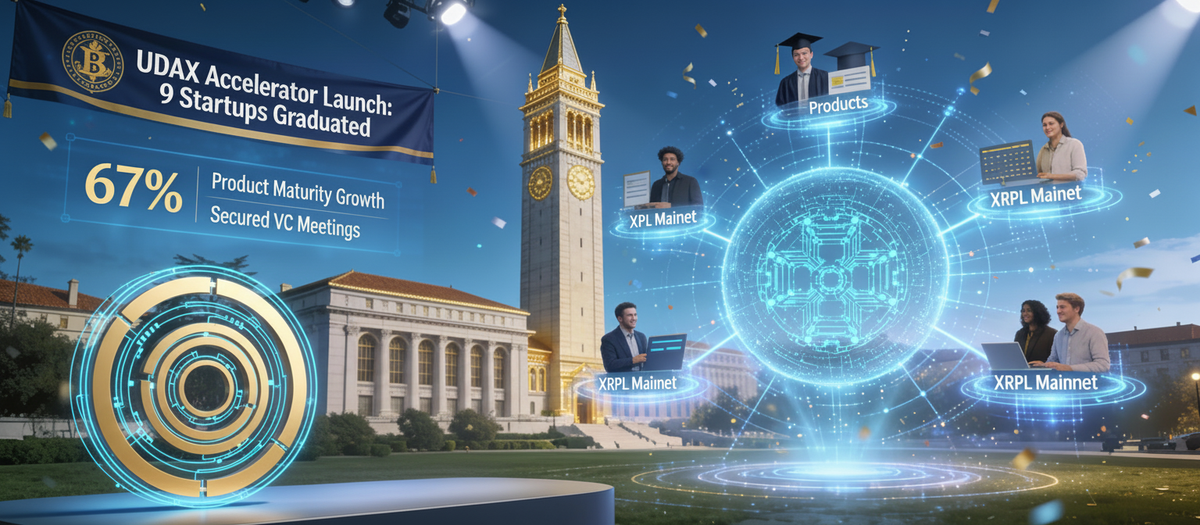
Ripple announced today the launch of the University Digital Asset Xcelerator (UDAX) program in partnership with the University of California, Berkeley, marking a significant evolution of its University Blockchain Research Initiative. The inaugural six-week accelerator concluded with nine startups presenting to 13 leading venture capital firms at Ripple's San Francisco headquarters, demonstrating how academic rigor can rapidly translate into market-ready blockchain solutions.
From Concept to Mainnet in Six Weeks
The pilot UDAX cohort at UC Berkeley ran during fall 2025, bringing together Ripple engineers and Berkeley faculty to guide founders building across tokenized capital markets, decentralized insurance, and the creator economy. According to Ripple's official announcement, the program achieved remarkable results: participants reported a 67% average increase in product maturity and 92% average growth in fundraising confidence.
The accelerator launched with an on-campus summit in Berkeley, followed by weeks of development coaching and intensive fundraising preparation. The program culminated in a demo day featuring remarks from Ripple co-founder Chris Larsen and CTO Emeritus David Schwartz, where founders showcased their progress to XRPL core developers, Ripple leadership, and representatives from 13 venture capital firms.
Several teams achieved significant commercial milestones during the program. WaveTip, a platform enabling instant tips for Twitch streamers, successfully transitioned to the XRPL Mainnet and launched on the Chrome Web Store. X-Card, which transforms physical collectibles into liquid assets, onboarded over $1.5 million in inventory and secured partnerships with merchant communities representing thousands of collectors.
Institutional Traction and Real-World Impact
The accelerator's focus extended beyond consumer applications to institutional-grade financial infrastructure. CRX Digital Assets, working to export Brazilian credit offerings to global markets, increased its tokenized volume from $39 million to $58 million during the program by leveraging Ripple's global payments network. The team validated how institutional players can utilize the XRP Ledger to unlock international liquidity.
Blockroll capitalized on RLUSD momentum to launch stablecoin-backed virtual cards for African freelancers. According to the announcement, Blockroll CEO Sadiq Isiaka stated that RLUSD enables the company to "offer additional institutionally accepted stablecoins that streamline remittance settlements from Sub-Saharan Africa's leading source (the U.S.) and enable financial access use cases such as stablecoin-backed debit cards that work globally."
For BlockBima, which builds automated climate-risk microinsurance for vulnerable communities, the program helped triple active users. The team noted that refining their fundraising pitch under industry mentors was their single greatest achievement, moving them from uncertainty to an investor-ready position.
Why UC Berkeley?
The partnership between Ripple and UC Berkeley reflects both institutions' commitment to fostering practical blockchain innovation. According to 2024 PitchBook university rankings, UC Berkeley graduates have founded more venture-backed companies than undergraduate alumni from any other university worldwide. The university's alumni account for 1,811 founders and 1,642 companies, with female graduates founding 281 companies that have raised approximately $7 billion.
Berkeley's entrepreneurship ecosystem includes programs like Berkeley SkyDeck, The House Fund, and the Haas School of Business Blockchain Initiative, creating what Chancellor Rich Lyons has called a campus that "spawned more venture capital funded startups than any other university."
The UDAX program builds on Ripple's University Blockchain Research Initiative (UBRI), which since 2018 has partnered with more than 60 universities globally to support blockchain research, technical development, and innovation. Recent UBRI expansions include the formation of an Advisory Council led by XRPL Co-Creator David Schwartz and partnerships funded directly in Ripple's RLUSD stablecoin.
Additional Startup Achievements
Other cohort highlights demonstrate the program's breadth across different blockchain use cases:
- Spout: Finalized a complex equity tokenization model and secured several key VC meetings through one-on-one mentorship
- EXFIL: Doubled their active user base, forged 50+ strategic relationships, and refined their real-time blockchain threat intelligence platform
- WellArrive: Refined their vision to a strategic, high-impact dual-sided marketplace model that addresses data fragmentation for healthcare researchers
- Mintara Labs: Validated their go-to-market strategy for crypto-bank insurance, successfully generating revenue and underwriting initial deposits during the six-week period
XRP Ecosystem Implications
The UDAX program's launch comes amid significant momentum for Ripple's broader ecosystem. The company's RLUSD stablecoin, launched in December 2024, has reached a market capitalization of approximately $1.3-1.4 billion by January 2026, making it the third-largest U.S.-regulated stablecoin.
Recent developments confirmed on January 12, 2026, show that RLUSD is now being used as collateral by leading financial institutions including BlackRock. Additionally, Ripple invested $150 million in LMAX Group on January 15, 2026, as part of a multi-year partnership to integrate RLUSD into institutional trading infrastructure.
The use of RLUSD in the UDAX program creates a practical feedback loop: startups building on XRPL gain experience with Ripple's enterprise-grade stablecoin, while RLUSD benefits from real-world testing across diverse use cases from creator economy platforms to institutional credit markets.
RLUSD transactions on the XRP Ledger burn XRP as network fees, creating a direct connection between stablecoin adoption and XRP's deflationary mechanism. As more UDAX startups launch products that utilize RLUSD for payments, settlement, or collateral, this could theoretically contribute to increased network activity on XRPL.
However, it's important to note that the ultimate market impact will depend on whether these startups achieve sustained user adoption and transaction volume. The accelerator provides strong initial support, but commercial success requires ongoing execution beyond the six-week program.
Regulatory Context and Compliance Focus
RLUSD's institutional traction reflects Ripple's compliance-first approach to stablecoin development. The stablecoin is issued by Standard Custody & Trust Company under a New York Department of Financial Services (NYDFS) trust charter, subjecting it to bank-level oversight. The token is fully backed 1:1 by U.S. dollar deposits, short-term U.S. Treasuries, and cash equivalents, with monthly reserve attestations published by an independent auditor.
Recent regulatory approvals include recognition by Dubai's Financial Services Authority, which included RLUSD among three approved stablecoins under its crypto framework. This international regulatory acceptance, combined with the upcoming GENIUS Act taking effect in January 2027—which establishes comprehensive federal stablecoin standards—positions RLUSD favorably as institutions seek compliant digital dollar alternatives.
Looking Ahead: Applications Open for Next Cohort
According to Ripple's announcement, the company is now accepting applications for the next UDAX cohort. Founders interested in building on the XRP Ledger can apply through Ripple's online form.
The success of the pilot program demonstrates that structured accelerator support, combined with direct access to blockchain infrastructure engineers and established venture capital networks, can meaningfully compress the timeline from concept to market-ready product. For the XRP ecosystem, this represents a systematic approach to fostering innovation beyond speculative trading, focusing instead on building applications that deliver tangible utility.
As Ripple continues expanding UBRI partnerships—now spanning more than 60 universities across North America, Europe, and Asia—the UDAX model could replicate at additional institutions, creating a distributed network of blockchain accelerators focused on the XRP Ledger.
Key Takeaways
The UDAX pilot at UC Berkeley achieved measurable outcomes: nine startups progressed from concept to market-ready solutions, multiple teams secured VC meetings and partnerships, and several launched products on the XRPL Mainnet during the six-week program. The 67% average increase in product maturity and 92% growth in fundraising confidence among participants suggest the accelerator model effectively bridges academic innovation and commercial deployment.
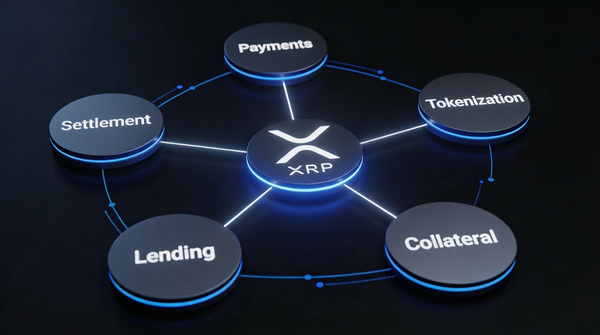
For the XRP ecosystem, UDAX represents infrastructure building—creating a pipeline of builders with the technical expertise, mentorship, and capital connections to develop applications on XRPL. Combined with RLUSD's growing institutional adoption and regulatory approvals, these developments position Ripple's ecosystem beyond cryptocurrency trading toward practical blockchain utility in payments, tokenization, and financial infrastructure.
The program's replication potential across Ripple's network of 60+ university partners could systematically expand the developer ecosystem building on XRPL, though the ultimate impact will depend on whether accelerator graduates achieve sustained commercial traction post-program.
Sources
Official Announcements:
- Ripple and UC Berkeley Launch UDAX
- Ripple's University Blockchain Research Initiative (UBRI)
- Ripple Expands Academic Collaboration with UBRI Advisory Council
- RLUSD Expansion to Layer 2 Networks
University Data:
- UC Berkeley Ranked #1 for Startup Founders
- Berkeley Haas Blockchain Initiative
- UC Berkeley Startup Ecosystem Overview
Market Data and Analysis:
- RLUSD Latest Updates - CoinMarketCap
- RLUSD Institutional Collateral Status
- Ripple's $150M LMAX Investment - CoinDesk
- RLUSD Integration on LMAX - U.Today
Startup Cohort Members:
DISCLAIMER: This newsletter is for informational purposes only and does not constitute investment advice, advertising, or a recommendation to buy, sell, or hold any securities. This content is not sponsored by or affiliated with any of the mentioned entities. Investments in cryptocurrencies or other financial assets carry significant risks, including the potential for total loss, extreme volatility, and regulatory uncertainty. Past performance is not indicative of future results. Always consult a qualified financial professional and conduct thorough research before making any investment decisions.