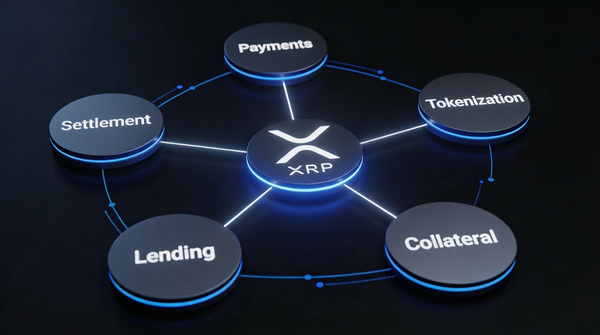
New SEC Chair Paul Atkins Signals Crypto Bill Ready to Pass: What This Means for Digital Assets
SEC Chair Paul Atkins says crypto structure bill is ready to pass. What this regulatory shift could mean for Bitcoin, XRP, and the digital asset industry as Washington prepares for a new approach to cryptocurrency oversight.
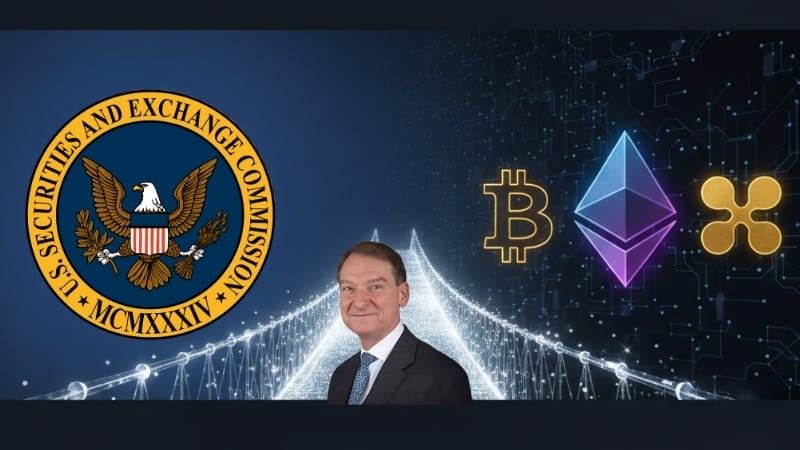
SEC Chair Paul Atkins has indicated that comprehensive crypto structure legislation is ready to advance through Congress, marking a potential turning point for digital asset regulation in the United States.
According to recent reports, Paul Atkins, who has been nominated to lead the Securities and Exchange Commission under the incoming Trump administration, stated that new crypto structure legislation is "ready to pass." This development comes as the cryptocurrency industry awaits clearer regulatory frameworks that could define how digital assets are classified and governed in the United States.
🚨The new SEC Chair - Paul Atkins says that the new crypto structure bill is ready to pass! #XRP pic.twitter.com/ATWw5uogxf
— JackTheRippler ©️ (@RippleXrpie) December 12, 2025
Background: A Pro-Crypto Regulatory Shift
Paul Atkins' nomination represents a significant departure from the SEC's previous approach to cryptocurrency regulation. Unlike his predecessor Gary Gensler, who pursued an aggressive enforcement-first strategy against crypto companies, Atkins has a reputation for being more industry-friendly and supportive of innovation in financial markets.
Atkins previously served as an SEC Commissioner from 2002 to 2008 and has since been involved in the private sector through his firm Patomak Global Partners, including work that has brought him into contact with blockchain and digital asset companies. His appointment signals the Trump administration's intention to create a more favorable regulatory environment for the cryptocurrency industry.
According to Kristin Smith, CEO of the Blockchain Association, "Paul Atkins has a proven track record of supporting innovation while maintaining robust investor protections. His leadership at the SEC could usher in a new era of regulatory clarity for digital assets."
What the Crypto Structure Bill Could Include
While specific details of the proposed legislation have not been fully disclosed, comprehensive crypto structure bills currently under congressional consideration typically address several key areas:
Regulatory Clarity: Establishing clear definitions for different types of digital assets and determining which fall under securities regulation versus commodity regulation. The Financial Innovation and Technology for the 21st Century Act (FIT21), which passed the House in May 2024, provides one framework for how this could work.
Market Structure: Creating frameworks for cryptocurrency exchanges, custody providers, and other market participants to operate with regulatory certainty, similar to provisions in proposed stablecoin legislation.
Consumer Protection: Implementing safeguards for retail investors while allowing for innovation and market growth.
Stablecoin Regulation: Addressing the unique regulatory needs of stablecoins, which have become critical infrastructure for the digital asset ecosystem.
Cynthia Lummis, U.S. Senator and crypto advocate, has been vocal about the need for comprehensive legislation, stating that "Clear rules of the road will allow American innovation to flourish while protecting consumers."
Implications for the Broader Crypto Market
If comprehensive crypto legislation passes, it could have far-reaching effects on the digital asset industry:
Institutional Adoption: Clear regulatory frameworks could accelerate institutional investment in cryptocurrencies. BlackRock CEO Larry Fink has previously cited regulatory uncertainty as a barrier to broader institutional participation.
Exchange Operations: U.S.-based cryptocurrency exchanges like Coinbase and Kraken could gain clarity on listing requirements and operational standards, potentially allowing them to offer a wider range of digital assets.
Innovation: Defined regulatory pathways could encourage blockchain innovation and the development of new financial products built on digital asset infrastructure.
Global Competitiveness: Clear regulations could help the United States compete with other jurisdictions that have already established comprehensive crypto frameworks, such as the European Union's MiCA regulation.
Brian Armstrong, CEO of Coinbase, commented on the regulatory shift: "The appointment of Paul Atkins signals a fundamental change in how America approaches crypto regulation. We're optimistic this will lead to the clarity the industry needs to build the future of finance."
Impact on XRP and Ripple
The prospect of new crypto legislation holds particular significance for XRP and Ripple Labs, given the company's ongoing legal battles and regulatory challenges:
Legal Clarity: Comprehensive legislation that clearly defines which digital assets are securities could potentially resolve questions that have been central to Ripple's case with the SEC. In July 2023, Judge Analisa Torres ruled that XRP sales on secondary markets were not securities offerings, though the case continues regarding institutional sales.
Business Expansion: Regulatory clarity would allow Ripple to expand its operations in the United States with greater confidence, potentially leading to new partnerships with U.S. financial institutions that have been hesitant due to regulatory uncertainty.
Market Access: Clear regulations could enable XRP to be listed on more U.S. exchanges and integrated into more financial products, potentially increasing liquidity and adoption.
Cross-Border Payments: Ripple's core business of facilitating cross-border payments through RippleNet could benefit from regulatory frameworks that acknowledge and accommodate the use of digital assets for payment and settlement purposes.
Brad Garlinghouse, CEO of Ripple, has been outspoken about the need for regulatory clarity, recently stating: "The U.S. needs clear crypto regulations. Paul Atkins' appointment is a positive step toward creating an environment where blockchain innovation can thrive domestically rather than being pushed offshore."
Expert Analysis and Market Commentary
Industry experts have weighed in on what Atkins' appointment and potential legislation could mean for the crypto sector:
Nic Carter, Partner at Castle Island Ventures, observed: "Atkins represents a 180-degree turn from the Gensler era. Instead of regulation by enforcement, we're likely to see a more collaborative approach that actually creates workable frameworks for crypto businesses."
Perianne Boring, Founder and CEO of the Chamber of Digital Commerce, noted: "This is the moment the industry has been waiting for. With Atkins at the helm and a more crypto-friendly Congress, we have the best opportunity in years to get comprehensive legislation passed that provides the clarity businesses need to operate."
However, not all commentary is uniformly optimistic. Dennis Kelleher, CEO of Better Markets, a financial reform advocacy group, cautioned: "While regulatory clarity is important, it must not come at the expense of investor protection. Any crypto legislation must include robust safeguards against fraud, manipulation, and systemic risk."
Important Considerations and Uncertainties
While Atkins' statement suggests momentum for crypto legislation, several factors could affect the timeline and final form of any bill:
Congressional Process: Even with support from the incoming SEC Chair, legislation must still navigate the full congressional process, including committee reviews, potential amendments, and votes in both the House and Senate.
Bipartisan Support: The success of crypto legislation will likely depend on achieving bipartisan consensus. Representative Patrick McHenry (R-NC) and Representative Maxine Waters (D-CA) have worked together on crypto-related legislation, demonstrating that bipartisan cooperation is possible.
Implementation Timeline: Even if legislation passes, there would likely be a period before new frameworks are fully implemented, as regulatory agencies would need to develop specific rules and guidance.
Scope and Details: The actual provisions of any legislation remain to be seen, and the devil is often in the details when it comes to regulatory frameworks.
What This Means for Investors
For cryptocurrency investors and market participants, Atkins' comments represent a potentially positive development, but caution is warranted:
The prospect of clearer regulations could reduce uncertainty and create more stable market conditions. However, until specific legislation is passed and implemented, the regulatory landscape remains in flux.
Investors should continue to monitor developments closely, as the details of any legislation could have varying impacts on different cryptocurrencies and business models. What benefits one type of digital asset or use case may create challenges for others.
Additionally, while regulatory clarity is generally positive, it will also likely bring compliance requirements and operational standards that cryptocurrency companies and platforms will need to meet.
Carol Goforth, Professor at University of Arkansas School of Law and expert in securities law, explains: "Regulatory clarity cuts both ways. While it removes uncertainty, it also means companies will need to comply with specific requirements. The transition period could be challenging for some businesses."
Looking Ahead
Paul Atkins' statement that crypto structure legislation is "ready to pass" marks a notable shift in the regulatory conversation around digital assets in the United States. After years of enforcement actions and regulatory uncertainty under the Gensler SEC, the prospect of comprehensive legislation could provide the clarity that the industry has long sought.
For XRP and Ripple specifically, this development could be particularly significant given the company's regulatory challenges. However, the ultimate impact will depend on the specific provisions of any legislation and how they address the classification and use of digital assets like XRP.
As the incoming Trump administration takes shape and the new Congress convenes in January 2025, the cryptocurrency industry will be watching closely to see whether Atkins' optimism about crypto legislation translates into concrete regulatory reform.
Tom Emmer, U.S. Representative and co-chair of the Congressional Blockchain Caucus, expressed optimism: "With leaders like Paul Atkins who understand technology and innovation, we have a real opportunity to pass sensible crypto legislation that protects consumers while allowing American companies to compete globally."
DISCLAIMER: This newsletter is for informational purposes only and does not constitute investment advice, advertising, or a recommendation to buy, sell, or hold any securities. This content is not sponsored by or affiliated with any of the mentioned entities. Investments in cryptocurrencies or other financial assets carry significant risks, including the potential for total loss, extreme volatility, and regulatory uncertainty. Past performance is not indicative of future results. Always consult a qualified financial professional and conduct thorough research before making any investment decisions.
Sources
Official Government and Regulatory Sources
- U.S. Securities and Exchange Commission (SEC) - Paul Atkins Biography
Official SEC page detailing Atkins' previous service as Commissioner (2002-2008) - U.S. Congress - Financial Innovation and Technology for the 21st Century Act (FIT21)
Full text and status of House-passed crypto market structure legislation - SEC Press Release - Gary Gensler Remarks
Context on current SEC leadership and enforcement approach - SEC Litigation - SEC v. Ripple Labs Complaint
Original SEC complaint against Ripple Labs (December 2020) - U.S. District Court - Judge Torres Ruling on XRP
July 2023 summary judgment ruling on XRP's securities status
Industry Organizations and Advocacy Groups
- Blockchain Association - Official Website
Leading crypto industry advocacy organization; source for Kristin Smith commentary - Chamber of Digital Commerce - Official Website
World's largest blockchain trade association; source for Perianne Boring commentary - Better Markets - Official Website
Financial reform advocacy organization; source for Dennis Kelleher commentary
Cryptocurrency News and Analysis
- CoinDesk - Trump Nominates Paul Atkins to Lead SEC
Breaking news coverage of Atkins nomination - X (Twitter) Post - Original JackTheRippler Post
Source material showing Atkins' statement on crypto bill
Company and Executive Sources
- Ripple - Official Website
Official information on Ripple Labs and XRP - Ripple - RippleNet Payment Network
Information on Ripple's cross-border payment solutions - Patomak Global Partners - Official Website
Paul Atkins' consulting firm specializing in financial services - Coinbase - Official Website
Leading U.S. cryptocurrency exchange - BlackRock - Corporate Newsroom
Major institutional investor commentary on crypto markets
Congressional and Legislative Sources
- Senator Cynthia Lummis - Official Senate Website
Leading Senate voice on cryptocurrency legislation - Representative Tom Emmer - Official House Website
Co-chair of Congressional Blockchain Caucus - Representative Patrick McHenry - Official House Website
House Financial Services Committee leadership - Senate Banking Committee - Stablecoin Legislation
Information on pending stablecoin regulatory proposals
International Regulatory Context
- European Securities and Markets Authority (ESMA) - MiCA Regulation
EU's Markets in Crypto-Assets regulatory framework
Academic and Legal Expert Sources
- University of Arkansas School of Law - Professor Carol Goforth
Securities law expert commentary on regulatory implications - Castle Island Ventures - Nic Carter, Partner
Crypto industry investor and analyst commentary
Social Media Verified Sources
- Brad Garlinghouse (Ripple CEO) - Twitter/X Account
Direct statements from Ripple's chief executive - Brian Armstrong (Coinbase CEO) - Twitter/X Account
Commentary from major exchange leadership