Kraken Makes History: First Crypto Firm to Receive a Fed Master Account
Kraken Financial just made history — becoming the first crypto-native bank to receive a Federal Reserve master account. Here's what it means, what it doesn't, and why Ripple is watching very closely.

In a landmark moment for the digital asset industry, Kraken Financial — the Wyoming-chartered banking arm of crypto exchange Kraken — has been granted a Federal Reserve master account, making it the first crypto-native company in U.S. history to gain direct access to the Federal Reserve's core payment infrastructure. For an industry long forced to operate through intermediary banks and correspondent relationships, this is a genuine turning point.
What Just Happened — And Why It Matters
The approval comes more than five years after Kraken filed its application with the Kansas City Fed in October 2020. That's five years of regulatory examination, sustained lobbying, litigation by peers, and a shifting political climate — all of which finally converged on March 4, 2026.
The Federal Reserve Bank of Kansas City approved a limited purpose account for Wyoming-based Payward Financial, dba Kraken Financial, under the Federal Reserve Board of Governors' Account Access Guidelines. Under those guidelines, Kraken Financial is classified as a Tier 3 entity. The account was approved for an initial term of one year and includes restrictions and limitations tailored for Kraken Financial's business model and risk profile.
Through its Federal Reserve master account, Kraken Financial can connect directly to core U.S. payment rails, including Fedwire, without relying on intermediary banks. This direct connectivity enables faster and more efficient fiat movement for institutional clients, while reducing complexity, cost, and operational dependencies.
Kraken Co-CEO Arjun Sethi framed the moment this way in Kraken's official announcement:
"This milestone marks the convergence of crypto infrastructure and sovereign financial rails. With a Federal Reserve master account, we can operate not as a peripheral participant in the U.S. banking system, but as a directly connected financial institution."
Understanding the Limits: What This Account Can — and Cannot — Do
Precision matters here. This is not a full commercial banking charter. The approval lets Kraken speed up deposits and withdrawals for large traders and institutional clients, but is limited — with Kraken not earning interest on reserves or accessing the Fed's emergency lending facilities.
Under the limited-purpose, or "skinny," master account framework floated by Fed Governor Christopher Waller, the firm can hold reserves and settle in central bank money, but it cannot lend, access the Fed's discount window, or operate as a traditional commercial bank. Governor Waller is seeking to finalize his skinny master account proposal by the end of this year. The Kraken approval, sources close to the process tell Crypto In America, is designed as a "pilot" program to trial the skinny master account concept — in line with payments-only accounts provided by central banks in the United Kingdom, the European Union, and Switzerland.
Kansas City Fed President Jeff Schmid said the payments landscape is "actively evolving," and added that the integrity and stability of the U.S. payments system remains the Fed's top priority. Under Federal Reserve classification standards, the account holds Tier 3 access status, with specific operational constraints designed to align with Kraken's unique business structure and associated risk factors.
The Road Here: Operation Chokepoint 2.0 and a Fight for Access
The path to this approval was anything but smooth. For years, crypto companies operated under the shadow of what the industry called Operation Chokepoint 2.0 — a perception, backed by numerous accounts from founders, that regulators under the prior administration systematically worked to limit crypto firms' access to banking services. Kraken itself spent years in the Fed's application queue without resolution. Custodia Bank, another Wyoming SPDI that applied for a master account around the same time as Kraken, was denied in 2023 after the Federal Reserve Board ruled that Wyoming's charter did not constitute a "bank" under federal law. Senator Cynthia Lummis, one of the architects of Wyoming's crypto banking framework, had previously described the Fed's inaction as an illegal delay.
Wyoming Governor Mark Gordon and Senator Cynthia Lummis (R-WY) both hailed the decision. Lummis dubbed it a "watershed moment" for the industry, while Governor Gordon described the approval as signaling "support for Wyoming's banking and digital asset laws."
The Kansas City Fed's official press release also confirmed that the Fed applies the same set of standards to all requests for accounts and access to Federal Reserve services, including the requirement that the entity is legally eligible. That standardization is a key signal: the regulatory door is now open to other applicants, provided they meet the bar.
Regulatory Angle: What the Approval Implicitly Confirms
Beyond the payments plumbing, this approval carries important regulatory subtext. The approval implicitly recognizes that Kraken's anti-money laundering and sanctions compliance practices meet federal standards, and that Wyoming's SPDI regulatory framework is in line with Federal banking requirements.
Because Kraken Financial operates on a full-reserve model — holding liquid assets equal to or exceeding 100% of client deposits — the master account adds an extra layer of resilience. That full-reserve structure was central to the Fed's comfort in granting access.
Not everyone is celebrating, however. During last month's comment period, banking trade groups cautioned that skinny master accounts could pose risks to banking system safety because crypto is less tightly regulated. JPMorgan CEO Jamie Dimon has separately been vocal about the need to apply bank-like standards to crypto firms that engage in deposit or yield-bearing activities — a tension that remains unresolved as stablecoin legislation continues to move through Congress.
XRP and Ripple: What This Could Mean
While this announcement centers on Kraken, the implications for Ripple and XRP are significant and deserve serious analysis.
Other crypto firms, including Ripple and crypto-focused, federally chartered bank Anchorage Digital, have applied for Fed master accounts, but have yet to receive them to date. Ripple, through its trust company Standard Custody & Trust, has a pending application that the XRP community has closely tracked.
Kraken's approval matters to Ripple on several levels:
It validates the non-traditional bank pathway. Kraken's success demonstrates that the Federal Reserve is willing to engage meaningfully with crypto-native financial institutions — a precedent that strengthens the broader case for similar applicants moving through the review process.
It signals a regulatory thaw. The approval confirms that a crypto firm can satisfy the Fed's AML, compliance, and operational scrutiny under the current administration's more crypto-forward posture. That raises the probability that other pending applications, including Ripple's, could advance.
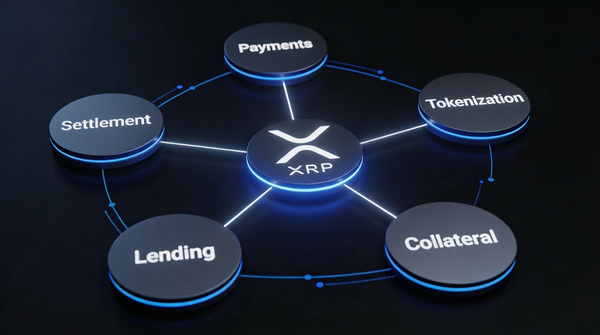
It could amplify XRP's institutional settlement role. RippleNet is designed for cross-border institutional payments using XRP as a bridge asset. If Ripple were eventually to secure a master account, the combination of Fedwire-direct settlement with XRP-powered liquidity corridors could be strategically powerful. It is important to note: Ripple has not announced any confirmed timeline for master account approval, and this scenario remains speculative pending regulatory outcomes.
The competitive picture is sharpening. Kraken now settles directly on Fedwire. Other institutions that secure similar access will be positioned to compete more aggressively in institutional payments — the very space Ripple has long targeted.
Broader Market Implications
The move could spark a surge of Fed master account applications from other crypto firms. On the horizon: Wyoming's Custodia Bank, which has been pursuing access nearly as long as Kraken and has been engaged in litigation against the Fed since 2022.
Sethi also outlined what the new infrastructure could eventually unlock — though Kraken frames these carefully as future possibilities, not confirmed products:
"Over time, this architecture could enable atomic settlement between fiat and crypto, institutional-grade cash management integrated with digital asset custody, and programmable financial products built within a fully regulated framework. This is what it looks like when crypto infrastructure matures into core financial infrastructure."
Key Takeaways
- Confirmed: Kraken Financial is the first digital asset bank in U.S. history to receive a Federal Reserve master account, approved by the Kansas City Fed on March 4, 2026.
- Confirmed: The account is a limited-purpose, Tier 3 account valid for one year — with no discount window access and no interest earned on reserves.
- Confirmed: Kraken can now settle directly on Fedwire, bypassing correspondent banks entirely.
- Confirmed: Ripple, through Standard Custody & Trust, and Anchorage Digital have pending master account applications that remain unresolved.
- Speculative: The timeline and likelihood of other pending applications advancing, and what role — if any — a Ripple master account approval could play in XRP adoption.
This is a genuine inflection point. For over a decade, crypto firms have been told — explicitly and implicitly — that the core rails of U.S. finance are off limits. Today, that changed.
DISCLAIMER: This newsletter is for informational purposes only and does not constitute investment advice, advertising, or a recommendation to buy, sell, or hold any securities. This content is not sponsored by or affiliated with any of the mentioned entities. Investments in cryptocurrencies or other financial assets carry significant risks, including the potential for total loss, extreme volatility, and regulatory uncertainty. Past performance is not indicative of future results. Always consult a qualified financial professional and conduct thorough research before making any investment decisions.
Sources
| # | Publication | Article | Type | Date |
|---|---|---|---|---|
| 1 | Kraken Blog | Kraken Becomes First Digital Asset Bank to Receive a Federal Reserve Master Account | Official Company Announcement | March 4, 2026 |
| 2 | Federal Reserve Bank of Kansas City | Federal Reserve Bank of Kansas City Approves Limited Account | Official Government Press Release | March 4, 2026 |
| 3 | BusinessWire | Kraken Becomes First Digital Asset Bank to Receive a Federal Reserve Master Account | Official PR Wire Distribution | March 4, 2026 |
| 4 | Crypto in America | Kraken Becomes First Crypto Firm Approved for Federal Reserve Master Account | Industry Newsletter — Eleanor Terrett | March 4, 2026 |
| 5 | CoinDesk | Kraken Becomes First Crypto Company to Secure Fed Master Account Access | Established Crypto News Outlet | March 4, 2026 |
| 6 | The Defiant | Kraken's Banking Arm Secures Federal Reserve Master Account | Crypto/DeFi News Outlet | March 4, 2026 |
| 7 | CryptoTimes | Kraken Secures Fed Master Account in Historic First for Crypto Industry | Crypto News Outlet | March 4, 2026 |
| 8 | Blockonomi | Kraken Breaks New Ground with Federal Reserve Master Account Approval | Crypto News Outlet | March 4, 2026 |