Evernorth's XRPN: Evaluating the XRP Treasury Model vs. ETF Alternatives
Evernorth's XRPN debuts on Nasdaq with $1B in XRP—but is this treasury model better than spot or leveraged ETFs? We break down premium valuation, yield potential, and risk factors to help investors choose the right XRP exposure vehicle.
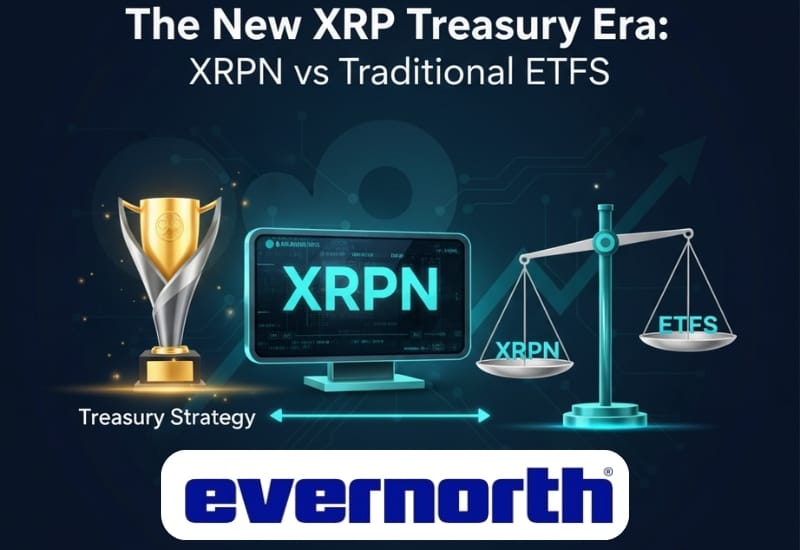
Evernorth Holdings has emerged as one of crypto's most profitable institutional entrants, completing nearly $1 billion in XRP purchases in its first week and generating approximately $75 million in unrealized gains. With its official Nasdaq debut under the ticker XRPN following a SPAC merger valued at over $1 billion, investors now face a critical question: How should they evaluate this new XRP treasury company compared to traditional spot or leveraged ETF alternatives like XRPR or XRPT?
What you need to know about Evernorth.
— Anders 🏁🌏 (@X__Anderson) October 21, 2025
The recently announced XRP treasury company. pic.twitter.com/ZG2K0TVhck
The Evernorth Model: Active Treasury Strategy
Evernorth is designed to provide investors with exposure to XRP through a regulated, liquid, and transparent structure, but unlike ETFs, it intends to actively grow its XRP per share through institutional and DeFi yield strategies, ecosystem participation, and capital markets activities.
The company's leadership team, headed by CEO Asheesh Birla, a blockchain executive with over 25 years of Silicon Valley experience who previously helped scale Ripple from startup to over 1,000 employees, brings deep expertise in both traditional finance and crypto-native innovation. Strategic advisors include Ripple executives Brad Garlinghouse, Stuart Alderoty, and David Schwartz, ensuring alignment with the broader XRP ecosystem while maintaining operational independence.
How Evernorth Generates Returns
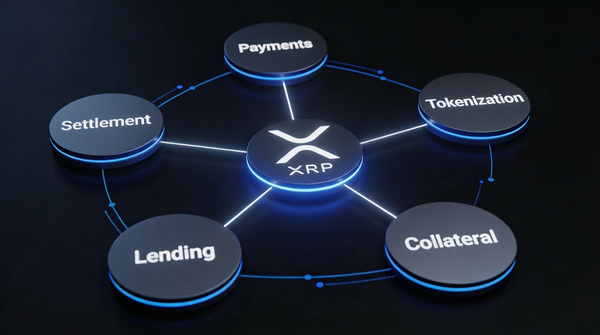
Evernorth's strategy includes validator participation to strengthen network security, DeFi integration leveraging Ripple's RLUSD stablecoin, and providing liquidity for projects that expand XRP's real-world utility. This active approach differentiates it from passive investment vehicles. According to the company's organizational chart, Evernorth operates through multiple strategic pillars:
Leadership Structure:
- Strategic advisors including Brad Garlinghouse, Stuart Alderoty, and David Schwartz
- Operational teams focused on institutional lending, liquidity provisioning, and DeFi yield opportunities
Investment Strategy:
- Accumulate XRP as a reserve asset through $200 million from SBI Holdings and additional backing from Pantera Capital, Kraken, GSR, and Ripple co-founder Chris Larsen
- Deploy capital into yield-generating activities
- Participate actively in XRP Ledger governance through validator operations
Early Performance and Market Impact
Evernorth spent approximately $947 million acquiring 388.7 million XRP at an average price of $2.44 per token during its first week of operation, completing about 95% of its $1 billion purchase target. The aggressive accumulation has already proven profitable, with over $75 million in unrealized gains as XRP trades around $2.61.
CryptoSlate analysis estimates Evernorth could absorb up to 2% of XRP's liquid supply within a year if it maintains its current pace, which would significantly dampen retail-driven volatility and potentially reinforce the asset's price depth.
Understanding the Investment Vehicle Landscape
To properly evaluate Evernorth, investors must understand how it compares to other XRP exposure vehicles available in the market.
Spot ETFs: Direct Price Tracking
The XRPR ETF, the first US exchange-traded fund offering direct XRP exposure, surpassed $100 million in assets under management barely a month after launch. Spot ETFs offer:
Advantages:
- Simple, direct exposure to XRP's price movements
- Lower management complexity
- Regulated investment vehicle accessible through traditional brokerage accounts
- No leverage risk
Disadvantages:
- Passive tracking only—no yield generation
- Management fees (typically 0.5-1% annually)
- No potential for outperformance beyond XRP's price appreciation
Leveraged ETFs: Amplified Exposure
XRPT provides 2x amplified exposure to XRP price movements through a registered, transparent investment vehicle, allowing sophisticated traders to magnify their market participation without the complexities of margin accounts. Like all leveraged ETFs, XXRP comes with significant market and compounding risk, seeking to deliver twice the daily return of XRP rather than holding the token directly.
Advantages:
- Amplified gains during upward price movements
- No need for margin accounts or direct cryptocurrency management
- Accessible through traditional brokerages
Disadvantages:
- The fund will lose money if XRP's performance is flat, and it's possible to lose money even if XRP increases for periods longer than a single day due to compounding effects
- Daily reset mechanism means returns for periods longer than a single day will very likely differ in amount, and possibly even direction, from the fund's stated multiple
- Extremely high risk—you may lose the full value of your investment within a single day
- Only suitable for short-term trading, not long-term holding
Treasury Companies: The MicroStrategy Parallel
Evernorth's model blends corporate balance-sheet strategy with blockchain yield generation, drawing comparisons to MicroStrategy's Bitcoin playbook where consistent accumulation tightened supply and created a proxy equity vehicle for crypto exposure.
To understand how to evaluate XRPN, we can learn from the extensive analysis of MicroStrategy's (now Strategy) Bitcoin treasury model:
The Premium Phenomenon: MicroStrategy's market cap reached about double the value of its Bitcoin holdings by late 2024, meaning investors were paying about $2 for every $1 of Bitcoin inside the company. MSTR offers an asymmetric investment profile that combines leveraged BTC exposure, regulatory accessibility, and public market liquidity through difficult-to-replicate leverage and strategic optionality.
Why Premiums Exist: Investors in MicroStrategy are valuing services and future opportunities beyond the Bitcoin itself, including access to public markets, management expertise in leveraging the balance sheet, and optionality in how the company deploys its growing Bitcoin per share.
The Risks: Strategy's Bitcoin-centric approach has redefined corporate treasury management, but governance conflicts, valuation volatility, and shareholder distrust pose existential risks. The price of Strategy can only go up if the price of Bitcoin goes up, and investors must be willing to attach a premium to the Bitcoin holdings.
Evaluating XRPN: A Framework for Investors
Based on extensive analysis of treasury company models and market dynamics, here's a comprehensive evaluation framework for assessing Evernorth versus alternatives:
1. Premium/Discount to Net Asset Value (NAV)
Key Metric: XRPN Share Price vs. XRP Holdings Per Share
Treasury companies typically trade at either a premium or discount to their net asset value (the total value of XRP held divided by shares outstanding). This is the single most important metric for evaluating value.
What to Monitor:
- Calculate XRP per share by dividing total XRP holdings by outstanding shares
- Compare current share price to the value of XRP per share
- Track this ratio over time
Interpretation:
- Premium (>1.0x NAV): The market values the company's active management strategy, yield generation, and growth prospects. In fundamental terms, investors are valuing services and future opportunities beyond the asset itself, including execution premium for management's skill.
- Discount (<1.0x NAV): The market is skeptical about management's ability to generate returns beyond holding XRP passively, or broader market conditions are unfavorable.
- Historical Context: MicroStrategy's mNAV premium fell from 3.4 to 1.57 during periods of shareholder skepticism, demonstrating that premiums can compress significantly.
Decision Framework:
- If trading at significant premium (>1.5x NAV): Consider whether active strategy justifies premium vs. simply buying spot ETF
- If trading at discount (<0.9x NAV): Potential value opportunity, but investigate why market is pessimistic
- If trading near NAV (0.9-1.1x): Evaluate based on yield generation potential
2. Yield Generation Potential
Key Metric: XRP Yield (analogous to MicroStrategy's BTC Yield)
Evernorth plans to grow XRP per share over time through institutional lending, liquidity provisioning, and DeFi yield opportunities. This is measured by the percentage change in XRP per share over time.
What to Monitor:
- Quarterly reports showing XRP per share growth
- Revenue from lending and DeFi activities
- Validator rewards and ecosystem participation income
Interpretation:
- Positive XRP Yield: The company is successfully growing holdings per share through active strategies, potentially justifying a premium to NAV
- Negative XRP Yield: Share dilution or capital raises are outpacing yield generation, destroying shareholder value
Warning: BTC yield can be misleading since it ignores the potential impact of price volatility on shareholder value—BTC yield could remain positive even during a price collapse.
3. Capital Structure and Leverage Risk
Key Metric: Debt-to-XRP Ratio
Evernorth uses standard treasury operations including institutional lending and liquidity provisioning, but unlike MicroStrategy's aggressive debt issuance, initial reports suggest a more conservative approach.
What to Monitor:
- Total debt outstanding
- Debt service coverage ratio
- Overcollateralization levels
Comparison Points:
- MicroStrategy: $8 billion in convertible debt and preferred equity obligations are 15x overcollateralized by Bitcoin reserves
- Evernorth: Initial capitalization appears primarily equity-based with $1 billion in gross proceeds from SPAC and PIPE investors
Risk Assessment:
- Lower leverage = Lower risk but potentially lower returns
- In the event of severe drawdowns or financing shortfalls, treasury companies could be compelled to sell holdings to service debt, negatively impacting per-share metrics
4. Liquidity and Trading Characteristics
Key Metric: Average Daily Trading Volume and Bid-Ask Spreads
What to Monitor:
- Daily trading volume relative to shares outstanding
- Bid-ask spreads (tighter is better)
- Price volatility compared to XRP itself
Comparison:
- Spot ETFs: Typically highest liquidity, tightest spreads
- Treasury Companies: May have lower liquidity, especially in early stages
- Leveraged ETFs: Variable liquidity, can have wider spreads during volatile periods
5. Time Horizon and Investment Objectives
Your optimal choice depends on your specific goals:
For Long-Term Holders (1+ years):
- Best: XRPN (if trading at reasonable premium) or Spot ETF
- Why: MSTR serves as a more practical and effective alternative for those unable or unwilling to hold Bitcoin directly, providing leveraged exposure through equity markets
- Avoid: Leveraged ETFs due to compounding decay
For Short-Term Traders (Days to weeks):
- Best: Leveraged ETFs or Spot ETFs
- Why: Daily price tracking without corporate event risk
- Consider: XRPN if trading patterns show predictable premium/discount oscillations
For Yield Seekers:
- Best: XRPN (if yield strategy proves successful)
- Why: Only option designed to generate returns beyond price appreciation
- Monitor: Quarterly reports on actual yield generation vs. projections
6. Risk-Adjusted Return Potential
Comparative Risk Profile:
Lowest Risk → Highest Risk:
- Spot ETF (XRPR): Direct XRP exposure with management fee
- XRPN at discount to NAV: Downside protection from asset backing
- XRPN at premium to NAV: Premium compression risk + XRP volatility
- 2x Leveraged ETFs (XRPT, XXRP, UXRP): Amplified daily volatility
- Direct XRP holding: Custody risk + full volatility exposure
Expected Return Profile:
MicroStrategy's leverage-driven framework has historically delivered a 25% BTC yield, outperforming Bitcoin through capital-raising activities and strategic positioning. If Evernorth successfully replicates this model:
- Spot ETF: Returns = XRP price appreciation - management fees (~0.5-1%)
- XRPN (successful execution): Returns = XRP price appreciation + yield generation + premium expansion
- XRPN (poor execution): Returns = XRP price appreciation - premium compression - dilution costs
- Leveraged ETF: Returns = ~2x daily XRP returns (with decay over longer periods)
The Verdict: Which Is Right for You?
Choose XRPN (Evernorth) If:
✓ You believe in active management and yield generation potential
✓ You want leveraged XRP exposure without using margin
✓ You can monitor premium/discount to NAV regularly
✓ You have a long-term investment horizon (2+ years)
✓ You're comfortable with equity volatility and corporate governance risks
✓ The stock trades at a reasonable premium (<1.5x NAV)
Choose Spot ETF (XRPR) If:
✓ You want simple, direct XRP exposure
✓ You prefer lower complexity and passive tracking
✓ You prioritize liquidity and tight bid-ask spreads
✓ You don't want to monitor corporate developments
✓ You're a long-term holder who values simplicity
Choose Leveraged ETF (XRPT, XXRP, UXRP) If:
✓ You're an active short-term trader (days, not months)
✓ You want amplified exposure to daily XRP movements
✓ You fully understand compounding decay risks
✓ You can actively manage positions daily
✓ You're prepared to accept significant and unexpected changes in value and the possibility of losing your entire investment
Red Flags to Watch
Based on lessons from the MicroStrategy model, investors should monitor these warning signs:
⚠️ Premium Expansion Above 2.5x NAV: Erosion of shareholder trust enabled controversial share issuance below 2.5x mNAV at MicroStrategy
⚠️ Negative XRP Yield: Indicates value destruction through dilution
⚠️ Aggressive Debt Issuance: Could force asset sales during market downturns
⚠️ Management Changes: Loss of key executives who understand crypto markets
⚠️ Governance Conflicts: Class-action lawsuits alleging misleading investors or opaque accounting practices
Market Context and Timing
The timing of Evernorth's entry coincides with growing momentum for regulated XRP investment products and treasury buys, with the XRPR ETF reflecting increasing institutional appetite for compliant XRP vehicles.
The broader institutional adoption trend extends beyond Evernorth. Multiple companies are building XRP treasuries:
Trident Digital Tech Holdings announced up to $500 million in XRP allocation for large-scale treasury and staking operations, while VivoPower International plans approximately $100 million to use XRP for yield via staking and lending.
Market watchers note that XRP-focused investment products such as ETFs are gaining traction among institutional investors, with these products providing a regulated and accessible way to participate in the XRP ecosystem.
Final Recommendation
For most investors, a diversified approach makes the most sense:
Balanced Portfolio (Long-term focused):
- 50-60% Spot ETF (XRPR) for core exposure
- 30-40% XRPN if trading at reasonable premium (<1.3x NAV)
- 0-10% Leveraged ETF for tactical trading only
Aggressive Portfolio (Higher risk tolerance):
- 40% XRPN (betting on successful yield generation)
- 40% Spot ETF (stability anchor)
- 20% Leveraged ETF (active trading allocation)
Conservative Portfolio (Risk-averse):
- 80% Spot ETF (simple, liquid exposure)
- 20% XRPN if trading at discount to NAV (value opportunity)
- 0% Leveraged ETF (avoid amplified volatility)
For a diversified portfolio, treasury companies can serve as a satellite allocation complementing direct holdings, with investors having higher risk tolerance potentially overweighting capital-raising vehicles to gain leveraged exposure, while those prioritizing stability might prefer direct allocations.
Conclusion
Evernorth's XRPN represents an innovative evolution in crypto investment vehicles, offering active treasury management rather than passive tracking. CEO Asheesh Birla stated that "this approach is designed to generate returns for shareholders while supporting XRP's utility and adoption—it's a symbiotic model where our strategy is designed to align with the growth of the XRP ecosystem."
However, the treasury company model is not without risks. The better buy depends on individual circumstances, with pure asset exposure offering direct participation without worrying about extra risks of companies continually raising capital.
Success will depend on:
- Evernorth's ability to generate meaningful yield beyond XRP appreciation
- Maintaining reasonable premium-to-NAV ratios
- Disciplined capital allocation and avoiding excessive dilution
- Navigating regulatory requirements and market cycles
For investors willing to actively monitor their positions and understand the nuances of treasury company valuations, XRPN offers compelling upside potential. For those seeking simplicity and direct exposure, traditional spot ETFs remain the more straightforward choice.
The key is understanding what you're buying: With XRPN, you're betting on active management and operational excellence, not just XRP price appreciation. Make sure that the bet is worth any premium you're paying.
DISCLAIMER: This newsletter is for informational purposes only and does not constitute investment advice, advertising, or a recommendation to buy, sell, or hold any securities. This content is not sponsored by or affiliated with any of the mentioned entities. Investments in cryptocurrencies or other financial assets carry significant risks, including the potential for total loss, extreme volatility, and regulatory uncertainty. Past performance is not indicative of future results. Always consult a qualified financial professional and conduct thorough research before making any investment decisions.
Sources
- CryptoSlate - New US company completes $1 billion XRP purchase
- Nasdaq - Evernorth to Go Public With Over $1 Billion in Gross Proceeds
- Evernorth Official Website
- OKX - Ripple XRP: Evernorth's Bold Strategy
- TradingView - How Evernorth plans to turn XRP into a $1B corporate treasury asset
- Cointelegraph - How Evernorth Plans to Make XRP a $1-Billion Corporate Treasury Asset
- Bitget News - Evernorth Holdings Makes Nasdaq Debut as XRPN
- Volatility Shares - XRPT | 2x XRP ETF
- ETF.com - ETF Spotlight: XXRP, Riding the XRP Wave With Leverage
- ProShares - UXRP | ProShares Ultra XRP
- Saxo - Market on edge: MicroStrategy - speculative bet or strategic genius?
- VanEck - Deconstructing Strategy (MSTR): Premium, Leverage, and Capital Structure
- The Motley Fool - Better Crypto Buy: Bitcoin vs. Strategy (MicroStrategy)
- AInvest - The Cracks in the Bitcoin Treasury Model: Is MicroStrategy Sustainable?
- Joannix - The MicroStrategy-Style Treasury Strategy: Why It Works and How to Value It
- AInvest - MicroStrategy's Bitcoin Treasury Strategy and Capital Markets Execution in Q2 2025