Black Swan Capitalist's Ripple Convergence Thesis: From SEC Defendant to Federal Reserve Partner
Ripple secured a seat on the Fed's Faster Payments Task Force—the only DLT company at the table. Combined with White House Digital Assets Council engagement, this marks Ripple's evolution from crypto defendant to essential payment infrastructure partner.
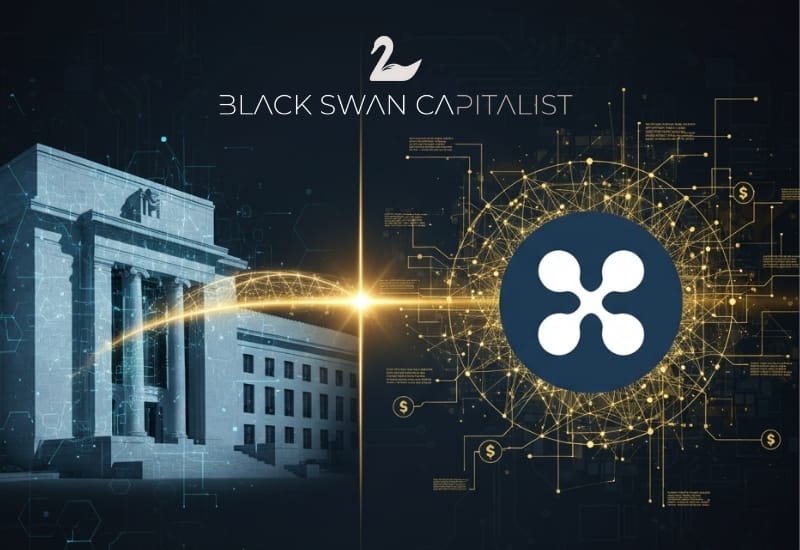
Crypto analyst Versan Aljarrah, known on X as Black Swan Capitalist, has published a comprehensive analysis arguing that Ripple is executing what may be the most sophisticated institutional integration strategy in cryptocurrency history—positioning XRP not as an alternative to traditional finance, but as essential infrastructure within it.
The Federal Reserve Validation
At the center of Aljarrah's thesis lies a pivotal development: Ripple's appointment to the Federal Reserve's Faster Payments Task Force Steering Committee. According to crypto researcher SMQKE, Ripple stands as the only distributed ledger technology company on this committee, which brings together 320 stakeholders including banks, regulators, and technology companies to modernize U.S. payments infrastructure.
McKinsey's assessment gave high marks to Ripple's capabilities, noting the company enables financial institutions to operate cross-border payments faster than the traditional 2-4 day timeline while providing end-to-end transaction visibility and cost transparency.
In a parallel development that Aljarrah emphasizes as strategically significant, Ripple announced that Patrick Witt, Executive Director of the President's Council of Advisors for Digital Assets at the White House, will keynote at Ripple Swell 2025 in New York City this November. The timing, Aljarrah argues, underscores Ripple's deepening engagement with U.S. government institutions—a dramatic shift from its previous position as an SEC regulatory defendant.
The Multi-Layered Strategy
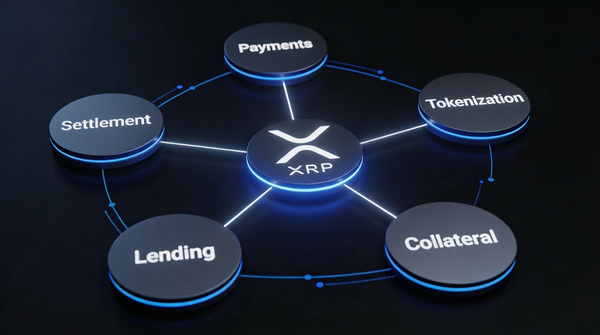
Aljarrah's analysis identifies five interconnected strategic pillars that work synergistically:
ISO 20022 Compliance as Foundation
Black Swan Capitalist highlights that XRP's integration into RippleNet was built using ISO 20022-compliant messaging from the start. With SWIFT's global transition for cross-border payments expected to be complete by November 2025, Ripple's early adoption positions it to capture market share as financial institutions upgrade their systems.
SWIFT Integration, Not Competition
Rather than the "Ripple versus SWIFT" narrative, Aljarrah emphasizes Ripple's complementary approach. Seven prominent fintech firms—ACI, EastNets, Finastra, TAS, Temenos, Volange, and CGI—now serve as active bridges between XRP and SWIFT networks, supporting ISO 20022-compliant cross-border payment systems.
Aljarrah speculates that if full-scale integration is achieved, Ripple could eventually handle $20–30 trillion of SWIFT's $150 trillion annual transaction volume—potentially capturing 14% of the global cross-border payment market within five years.
Banking License Pursuit
The analyst highlights Ripple's July 2025 application to the Office of the Comptroller of the Currency for national trust bank charters as "perhaps its most ambitious strategic move." This would allow Ripple to operate federally chartered banks with direct Federal Reserve system access. Combined with the $1 billion acquisition of GTreasury, Ripple is targeting the multi-trillion dollar corporate treasury management market.
XRP's Role in the Convergence
Aljarrah's thesis emphasizes that XRP serves as the operational bridge currency enabling this strategy. RippleNet now operates in 90+ countries and has processed over $70 billion in global volume. The company's On-Demand Liquidity product leverages XRP to facilitate real-time, low-cost cross-border payments, eliminating the need for financial institutions to pre-fund accounts in various foreign currencies.
The resolution of Ripple's SEC case in 2025, with regulatory clarity establishing that XRP is not considered a security for public exchange sales, has rekindled institutional interest. Market watchers are noting eight pending XRP ETF applications from major asset managers including Grayscale, WisdomTree, and Franklin Templeton.
Strategic Supply Management
Black Swan Capitalist draws attention to Ripple's supply dynamics strategy. According to SEC documents, Ripple locked 126.7 million XRP to be traded for company shares with ventures like Evernorth, reducing circulating supply while strengthening key partnerships. As X user "Randon Man" noted in the analysis, once ETFs, reserves, and corporate treasury holdings remove tokens from circulation, "there will be little left for speculation."
The RLUSD Stablecoin Bridge
The launch of Ripple USD (RLUSD) serves as a critical bridge between traditional finance and the XRP ecosystem. RLUSD crossed $700 million in circulation by September 2025, with a strategic partnership with Securitize allowing holders of tokenized funds like BlackRock's BUIDL and VanEck's VBILL to swap shares for RLUSD, automating liquidity and settlement for tokenized assets in real-time.
Institutional Infrastructure Expansion
Aljarrah documents Ripple's aggressive 2025 partnership expansion. Major banking partners include BNY Mellon as primary custodian for RLUSD and the Canadian Imperial Bank of Commerce, while more than 100 financial institutions globally now use RippleNet technology and the XRP Ledger.
Regional expansion includes a payments license in Dubai (March 2025) with UAE's Zand Bank and fintech Mamo as new customers, a partnership with Brazil's Mercado Bitcoin enabling cross-border payments in Brazilian reais, and integration with a leading South African bank for custody and settlement solutions.
The Black Swan Thesis
Aljarrah's central argument distinguishes Ripple's approach from purely decentralized cryptocurrency projects. Rather than positioning as an alternative to traditional finance, Ripple has "methodically embedded itself within existing systems as an efficiency upgrade." This strategy—combining blockchain innovation with regulatory compliance and institutional partnerships—may serve as a template for other digital asset projects seeking mainstream adoption.
The convergence of regulatory clarity, technical readiness through ISO 20022, Federal Reserve involvement, White House engagement, and institutional adoption creates what Black Swan Capitalist characterizes as "a potentially transformative moment for XRP as infrastructure for the modernized global financial system."
As Aljarrah concludes: "Ripple is no longer playing at the margins of finance—it's helping to write the rules for its future, with federal institutions increasingly recognizing blockchain's potential role in payment system evolution."
The coming months will reveal whether this comprehensive convergence strategy successfully positions XRPL and XRP as core infrastructure for the next generation of global payments. What's undeniable is that Ripple's trajectory from SEC defendant to Federal Reserve participant represents one of the most remarkable strategic pivots in cryptocurrency history.
DISCLAIMER: This newsletter is for informational purposes only and does not constitute investment advice, advertising, or a recommendation to buy, sell, or hold any securities. This content is not sponsored by or affiliated with any of the mentioned entities. Investments in cryptocurrencies or other financial assets carry significant risks, including the potential for total loss, extreme volatility, and regulatory uncertainty. Past performance is not indicative of future results. Always consult a qualified financial professional and conduct thorough research before making any investment decisions.
Sources
- Versan Aljarrah (Black Swan Capitalist) - X Post - Original thesis and analysis
- Ripple Official Blog - Federal Reserve Task Force announcement
- Federal Reserve Faster Payments Task Force - Official task force information
- McKinsey & Company - Cross-border payments assessment
- SWIFT ISO 20022 - Global messaging standard transition timeline
- RippleNet Platform - Network statistics and operational data
- U.S. Securities and Exchange Commission - Ripple legal case documentation and ETF applications
- Office of the Comptroller of the Currency - Banking charter applications
- Ripple USD (RLUSD) - Stablecoin information
- Securitize Platform - Tokenized asset infrastructure
- BlackRock - BUIDL fund information
- BNY Mellon - Custodial partnership details
- Canadian Imperial Bank of Commerce - Partnership information
- ACI Worldwide - Payment systems integration
- Finastra - Financial technology solutions